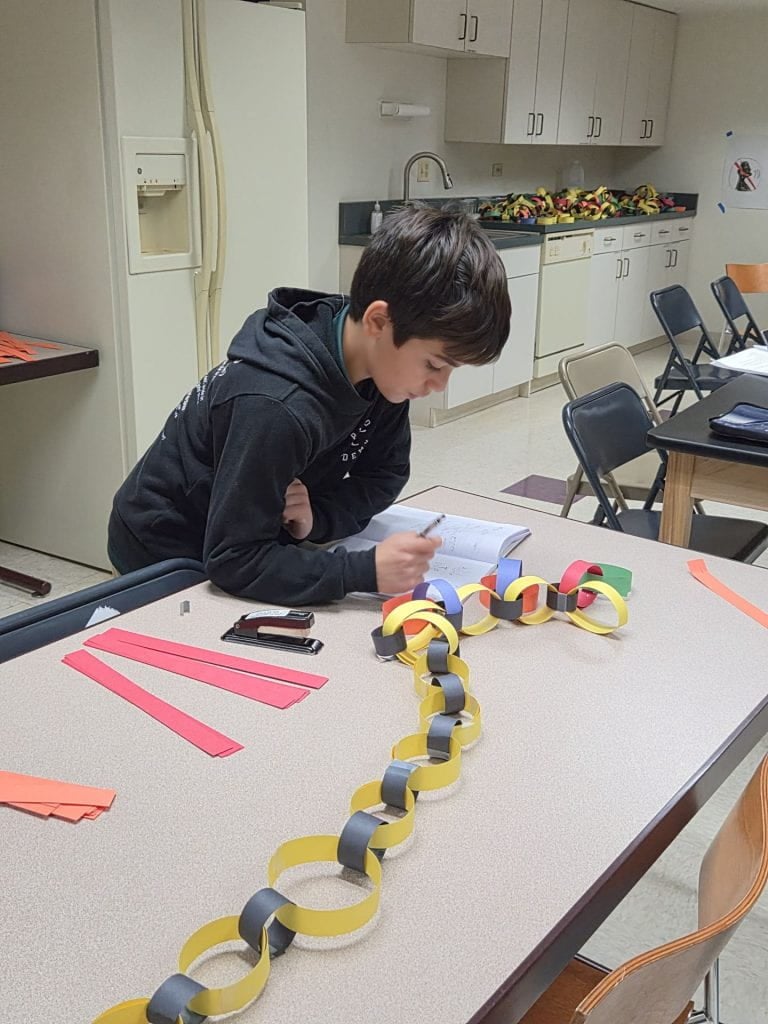
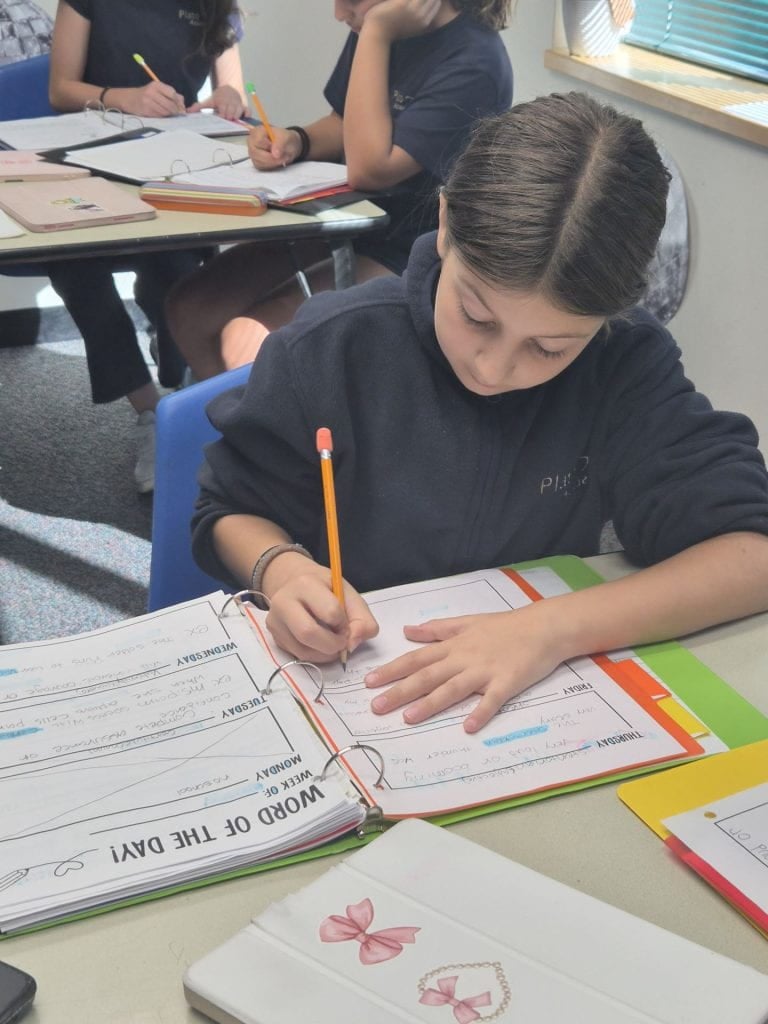
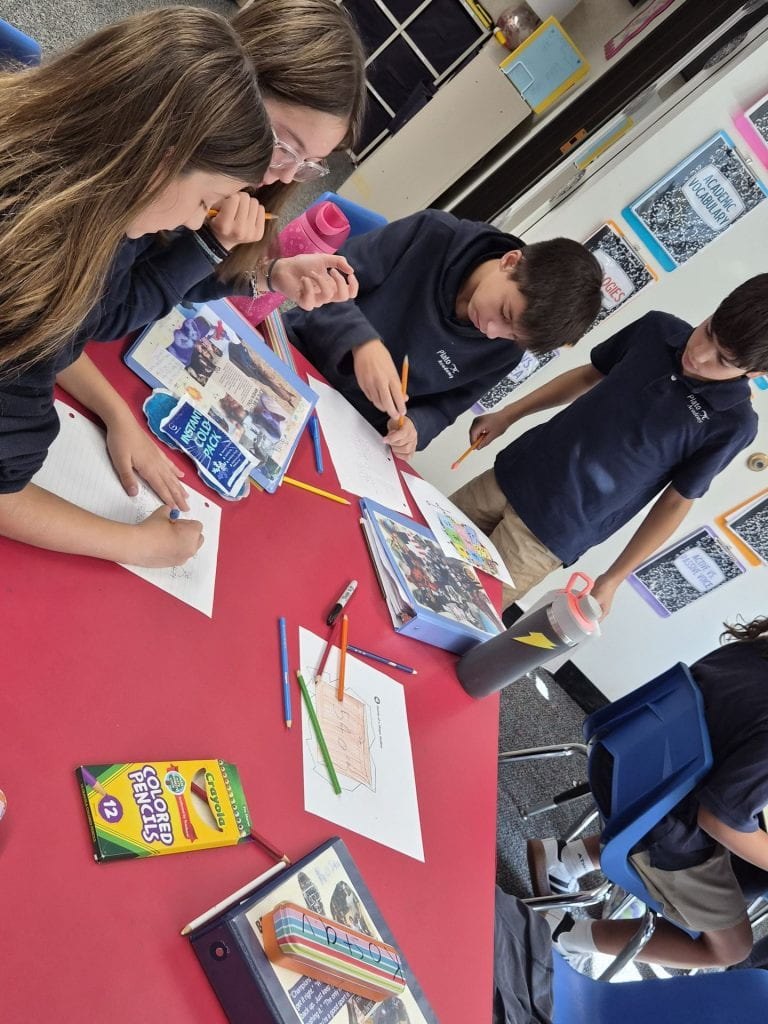
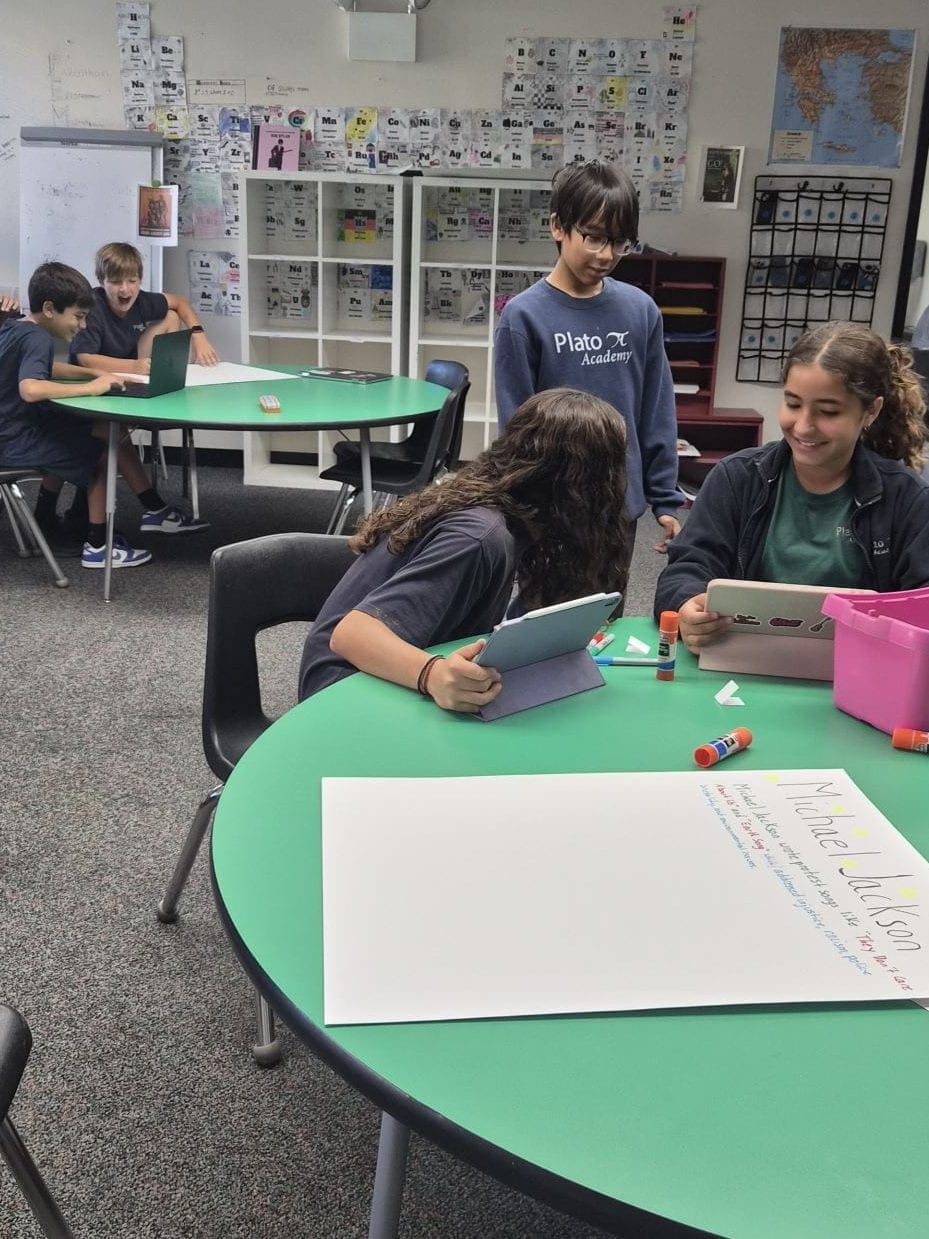
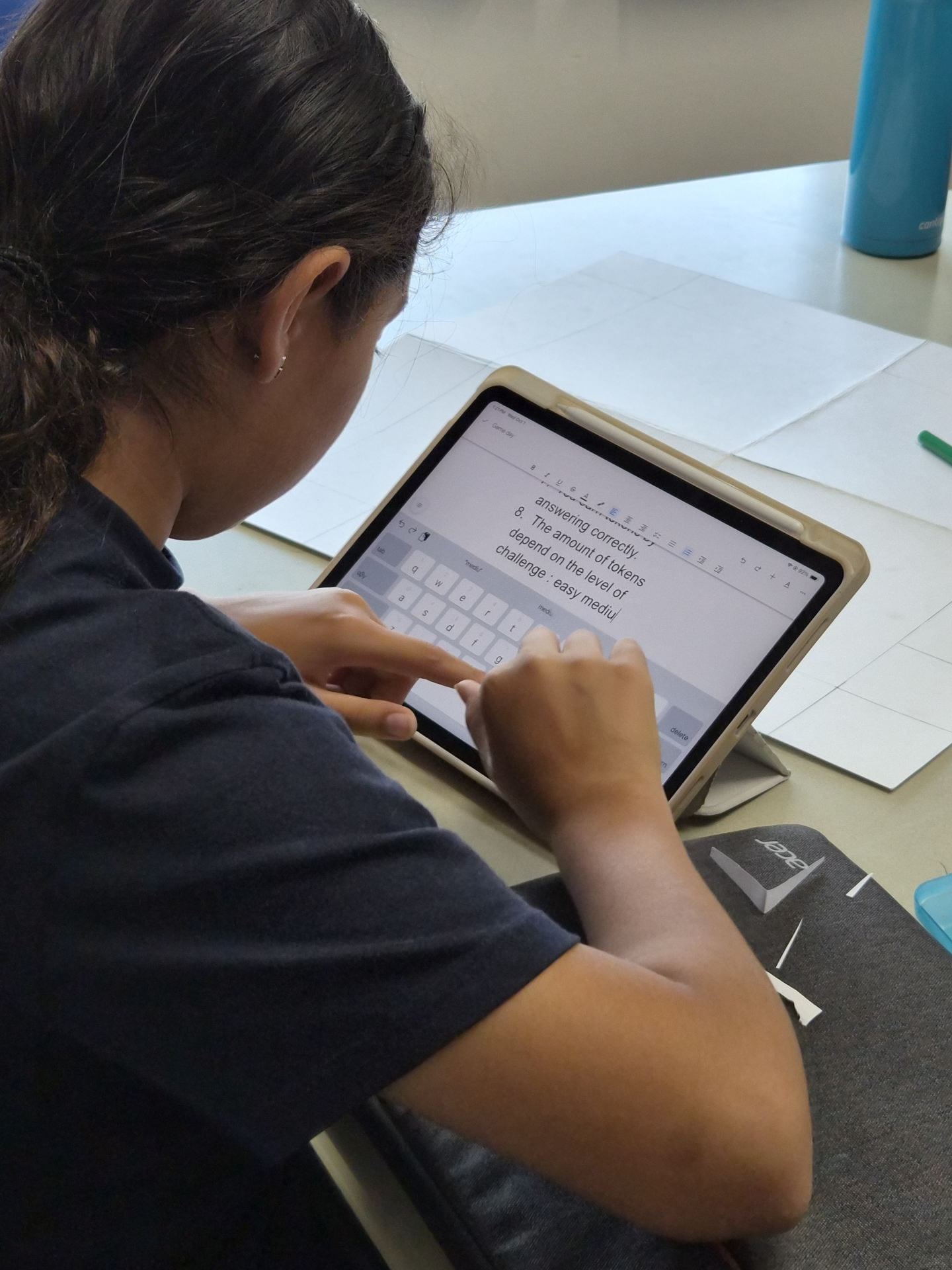
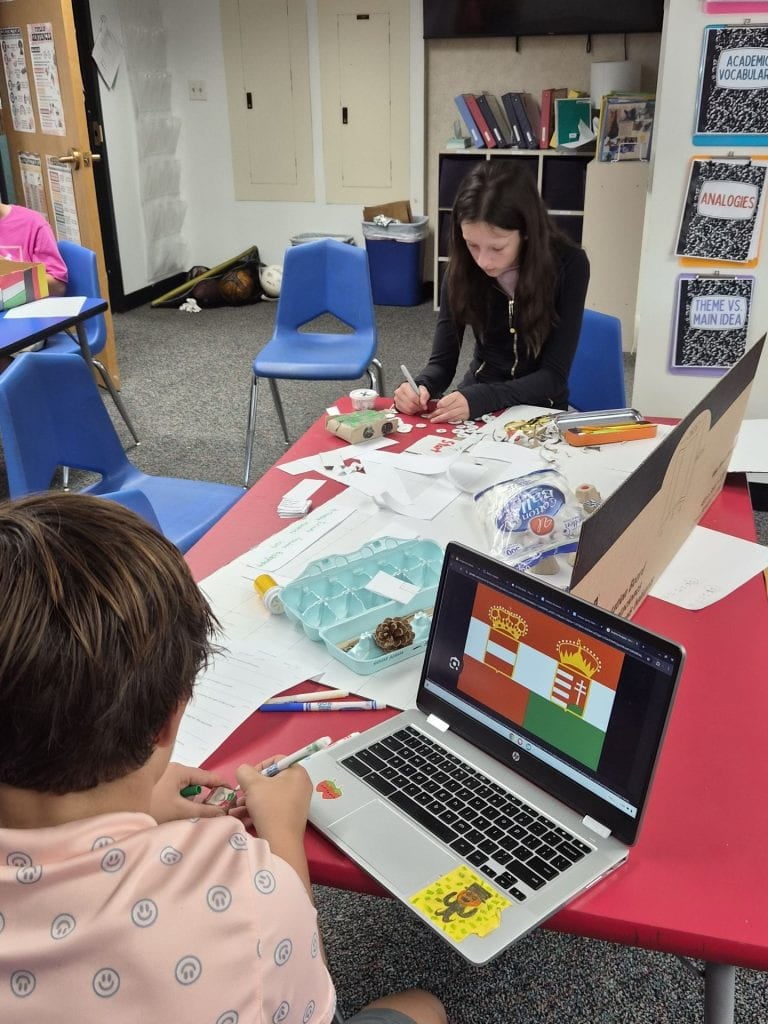
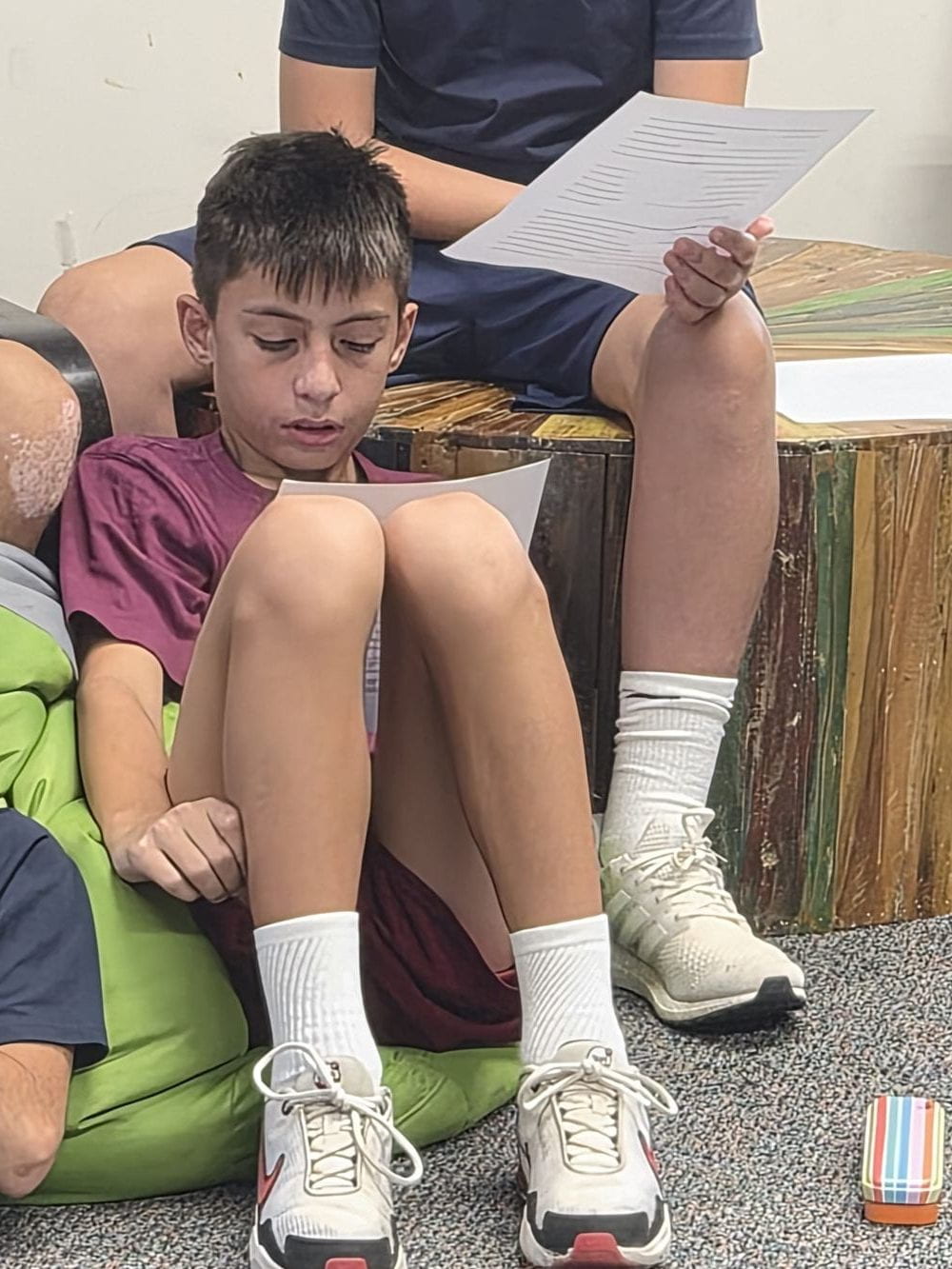
Today, we wrapped up our Multicultural Monday’s with a final project. Students got in groups to create a collage of images based on the different historical events, artists, and cultural movements we studied. In their groups of three, each student will then write a reflection/summary of what they learned about one of our three main topics:
The Day the Music Died
Bob Dylan and Protest Music
Motown
In our afternoon class, students finished up their conference prep to ensure they were 100% prepared for Thursday and Friday’s conference. Once students finished their conference prep, they were able to continue working on their Civil Rights Research Presentations to make sure they were ready to present on Wednesday.
TUESDAY, NOVEMBER 18, 2025
Today, students engaged in a Ketchup, Mustard, Pickle period! As our first trimester comes to a close, a Ketchup, Mustard, Pickle period is incredibly helpful for students to finish up any final activities before break.
WEDNESDAY, NOVEMBER 19, 2025
It’s presentation day! Students presented their Civil Rights Movement Research Presentations to their peers. It was a day filled with learning, and celebrating their hard work!
After presentations were over, students completed a brief reflection assignment and competed in a Thanksgiving Fun Facts Blooket! The goal of this activity was not only to have some fun, but to practice some test taking skills:
Making an educated guess when you don’t know the answer.
Learning from your previous mistakes to ensure you get it correct next time.
THURSDAY, NOVEMBER 20, 2025
Today, students took some time to finish up their collages they started in our Multicultural Monday class. As they were working, students who had a conference today were called to practice presenting their work.
We took a brief break to listen to Ms. Melissa’s class and their reader’s theater presentations about Thanksgiving! (:
In the afternoon, students had Science. They were given the opportunity to present their cell projects to lower grade students. I was really proud to see how many of them took the skills they learned from creating their Children’s Book Stories to these presentations as many presented their cells in simpler terms with easy-to-understand language for the kids. Many students also adjusted the amount of advanced vocabulary they integrated depending on what grade their audience was in.
FRIDAY, NOVEMBER 21, 2025
We started our morning class normal, with students competing in our weekly quick write and taking their vocabulary tests. This week’s quick write champion was Leo!
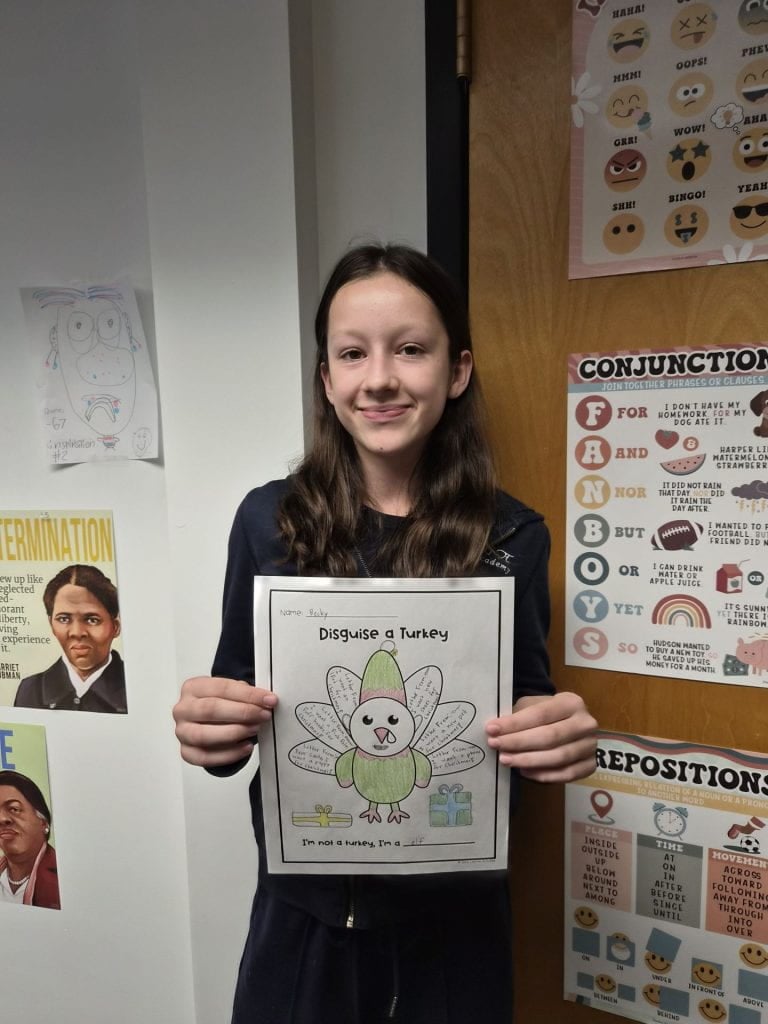
In the afternoon, I couldn’t resist having a bit of Thanksgiving Break fun… so students took some time to disguise some turkeys. As they worked, students who had a conference today were pulled to practice. (:
I hope everyone has a fantastic break!
I look forward to sharing more of our learning together when we return! (:
Today, we continued with our Motown Presentations for Multicultural Mondays and and ended up on an incredibly interesting side discussion. One group researched songs and somehow ended up with songs that were not part of the Motown discography – however, one of their songs were clearly inspired by the artistic styling of artists of color, and an additional protest song that opened the door for other Motown artists to speak out.
We talked about how White artists had (and have) an immense amount of privilege, and some used that privilege to open the door for artists of color to speak out and advocate for themselves through their music by starting to make it normalized on their already accepted platform. We also talked about how, even today, many artists of color do something and get backlash… until a White artist copies them and gets labeled as an innovator! We talked about how in many artistic mediums, people of color become trend setters missing their credit, as it only became cool when a White person “started” the trend, but was looked down upon when people of color did it first. We talked about how it traced back to Rock and Roll, to Rap, various fashion trends, slang language, etc.
In the afternoon, we enjoyed a play performed by Ms. Demetra’s class on knights and the medieval times!
Then, we had a conversation about bullying. We talked about the harmful impact it has now, as well as the negative lasting impacts. We also talked about media literacy and why it is incredibly important to be careful what you post/send on the internet. To help demonstrate these ideas, I used a piece of paper.
We started with verbal bullying:
I held up a white piece of paper, and instructed the students to say mean things to it. With every mean thing they said, I crumbled part of the paper. Then, I asked what we usually do after we said something hurtful to someone, to which everyone said was apologize. When we apologized to the paper, I tried my best to smooth out all the wrinkles. Even though it was better, the paper wasn’t the same. There were wrinkled scars from all the mean things they said to it – just like how someone never forgets the cruel words bullies say. I then talked about how their relationship/friendship with this paper is weaker, the paper’s physical strength is weaker. We talked about how even after we apologized, and became friends with the paper again, what happens when we back stab our friends by bullying them behind their back?
Once again, I had students say mean things to the paper. I ripped the paper. We talked about how each time we do these mean things, apologize, and do them again… the negative effects are more severe each time. This is due to broken trust, adding new wounds to old scars, etc. We can try to tape the paper, put books on top of it to smooth it out… but the paper will never be the same. I told them I still remember the words that were said to me when I was bullied in elementary school and our words can hurt; emphasizing that their actions will be remembered, and that they need to make sure they are remembered for their possitivity rather than being harmful to those who are different than us.
We then talked about doing these actions through cyber bullying:
We know what happens to the paper/person as an effect of the bullying, but I really wanted to highlight media literacy and how everything you post/send on the internet is forever. I held up a pencil. The class agreed that pencil’s are really cool because you can erase with them when you make a mistake. So, I wrote a mean “tweet” on a new sheet of paper, “I hate you!” Let’s say I began to regret my tweet, so I tried to erase it. However, it couldn’t fully erase… just like their posts/messages online will never fully delete. We talked about celebrities getting canceled and how it’s almost always something dug up from deep in their past they tried to bury/hide. We talked about how the older something is, the harder it would be to find – but it is never impossible to access. The erased letters will fade over time due to additional friction and aging, but there will always be an imprint on that paper that we can see if we look super carefully at it in the right lighting. We talked about how what they post/message could affect them getting into colleges, being a famous soccer player filming an anti-bullying campaign, etc. This was to demonstrate how their online actions will always be a part of them, and to be extremely careful when doing so.
After our lesson on cyber bullying and media literacy, students spent some time reading their independent novels silently. Then, students took our vocabulary test we needed to postpone due to last week’s field trip!
TUESDAY, NOVEMBER 11, 2025
Today, we expanded on our learning of Motown into a mini-unit on the Civil Rights Movement. We started with a discussion of what students know, and talked about some of the key goals and ways people protested. When we were talking about the ways people protested, Adrian sparked an incredibly interesting discussion and modern day connection to the protests against I.C.E. he had been hearing about. We talked about how, in America, if there is something the government is doing that you disagree with – you have the right to peacefully protest. So, some people in America are unhappy with I.C.E. and are protesting to make sure their distaste and concern is heard and understood. On the other hand, some people are proud of what I.C.E. agents are doing and make sure their support is heard and clear in other ways. Adrian then asked about how I.C.E. agents know if an individual is a legal immigrant or illegal immigrant, so we talked about how every organization has different procedures – some of which we likely don’t even know! However, in America, everyone has a right to due process; so, if an I.C.E. agent was incorrect about them being an illegal immigrant, that individual is able to prove their legal citizenship for release. We talked about how those mistakes could happen, which then brought up the topic of racial profiling… becoming our full circle moment to jump back into discussing the Civil Rights Movement as part of racial profiling is stereotyping. We talked about some of the stereotypes that people of color faced during the Civil Rights Movement, and how it was so important for their protest forms to be peaceful in order to disprove the idea that they were dangerous and violent. I throw this in here, not because I want to be political or show an off-topic conversation, but to highlight the deeper thinking and connections our class is making. While unexpected when I called on his raised hand, I absolutely loved that Adrian was able to make a modern-day connection to some of the history we were learning and pushed his peers to think and reflect deeper about other points in the lesson!
After our group discussion and background learning, I outlined 6 main events/influential people or groups in the Civil Rights Movement for partnered pairs to research and present to the class.
Ruby Bridges (Researched by Lily and Marina)
March on Washington (Researched by Leo and Adrian)
Montgomery Bus Boycott (Researched by Maggie and Kosta)
Little Rock Nine (Researched by Vasia and Rebecca)
Brown v. Board of Education (Researched by Teddy and Jason)
Shelley v. Kraemer (Researched by Gia and Nefeli)
This assignment will test their presentation skills (something we have been practicing all year with presenting their children’s books, Multicultural Monday posters, etc.) and their ability to assess if a source is credible for their research (something we recently practiced/learned how to do). Students were so engaged in their research and creating their presentations, they actually opted to continue working as they ate their snack. So, if you see some yummy treats in any of the photos below… that’s why! They will continue working on their presentations this week in preparation for their presentations on Wednesday, November 19th!
WEDNESDAY, NOVEMBER 12, 2025
Today, we took some time to begin preparing for our upcoming fall conferences. We took some breaks in between our prep work to enjoy service project presentations from Ms. Yana’s, Ms. Beth’s and Ms. Anna’s classes.
Ms. Yana’s Service Project:
Give back to children in need with a toy drive, organized by the Department of Child and Family Services. Each child, with your permission, will select a tag from Ms. Yana’s class tree! Each tag represents a DCFS child’s holiday wish list (items ranging from $20-$50). Please email me giving permission for your student to select a tag. You are also welcome to stop by either before or after school to select a tag together with your student.
Ms. Beth and Ms. Anna’s Service Project:
Bring any canned and/or boxed goods to donate in the collection bin in the office by November, 21, 2025. Donated food will be given to the Des Plaines Food Pantry!
We also had a wonderful presentation from the Music Institute to learn about pianos, guitars, and ukuleles. Speaking of music… we took a moment to reveal what song we will be performing for the holiday concert! In between our different blocks of conference prep work time, we took some occasional brain breaks to sing along to our class song to help get it into our minds before we begin our focused rehearsing after Thanksgiving break!
THURSDAY, NOVEMBER 13, 2025
Students engaged in a work period to make some good progress on their Civil Rights Research Presentations. If any group finished, they were able to continue working on conference prep.
FRIDAY, NOVEMBER 14, 2025
It’s Friday! Which means, it was time for the weekly quick write! Today, our champion was Becky, and I’m happy to report that our quality of writing is getting quite a bit more sophisticated. At the beginning of the year, I typed up one of our quick write winner’s pieces. It just so happened to also be Becky’s! Now, I don’t do this every week, but I am going to do it this week, as we are nearing the end of the grading period. I want to show you how much our writing has improved, even in the early drafting stage, in such a short period of time. By typing up their fright club stories, you saw how much great writing skills they have developing using the writing process, however, there is something to be said about improving their first draft writing abilities as well… and that is what the quick write is for! So, here is Becky’s first ever quick write:
Me and my furtive friend saw an arachnid during recess. There was a whole arachnid web on a mangrove! Me and my friend were about to touch it! We ran up to our teacher and told her everything super quickly, so she said we were using gobbledygook. We wanted to burn the arachnid, so we found some kindling and we tried using that, but it didn’t work. I was trying be furtive, then scare the arachnid away. It worked! The arachnid jumped off the mangrove! Then, we felt bad for the arachnid and became friends with it. We called him gobbledygook, because our teacher said we were using gobbledygook when we were trying to tell her about the arachnid and the arachnid’s web. When recess was over, we said bye to the arachnid and went back to school.
Here is Becky’s most recent quick write:
There was a robbery in my city. The police were collecting forensic evidence. They couldn’t ascertain why there had been so many robberies lately. The police went to court with the robber. The judge made a prudent decision, and sent the robber to jail. The robber did not exalt God. The furtive people in the robbed neighborhood call the robber an iconoclast. They also said the judge was really iconic for taking the robber to jail. Everyone was extolling the iconic judge.After they let the robber our of jail, the judge edified the robber. The judge said that he was like an iconoclast for robbing the furtive people. The robber will never rob anyone again for all of posterity.
As I typed her recent quick write, I can tell you the amount of misspellings and grammatical errors has decreased drastically from the first one. Also, she is challenging herself to create new worlds that she doesn’t have personal experience in to further enhance and sophisticate her writing. Her vocabulary has a wider variety, the vocabulary words are being used more intentionally, etc. This improvement is not only evident in her writing, but in her classmate’s quick writes as well!
After we did our quick write competition, we took our vocabulary test. During our next class period, students did a reading comprehension diagnostic and some quill practice for their quill period this week.
Math with Mr. Zafeiris!
This week in math, we focused on, solving systems of equations using substitution (choosing a variable, substituting into the other equation, solving, and checking the solution), and clearing fractions in equations by multiplying both sides by the least common multiple (LCM) of the denominators before solving.
Science with Ms. Pam!
Students learned about dominant and recessive jeans this week! They learned how to solve genetic punnet squares, and used that knowledge to practice solving them and create their own monsters.
This morning, we reconnected with Mr. Joe’s class to finish up our Motown research and begin presenting and discussing our findings. We will continue presentations next week and finish up our Motown unit!
In the afternoon, students completed their postponed vocabulary test. Once they finished their test, they engaged in some silent reading time.
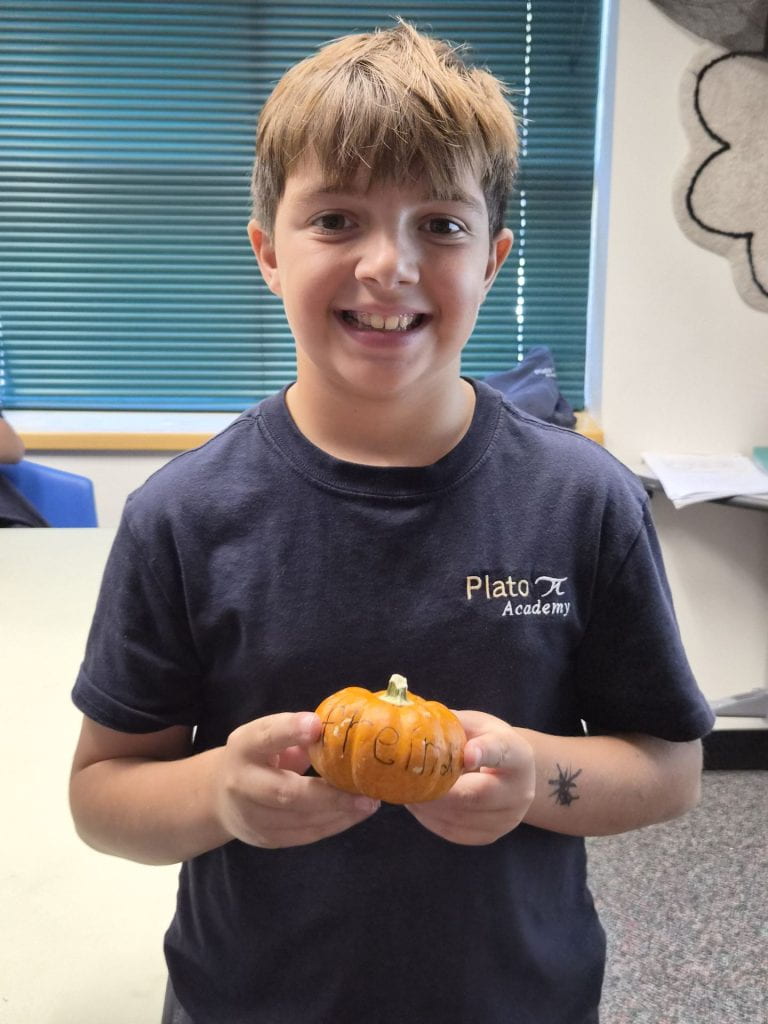
In our final block of the day, students took some time to reflect on what they were thankful for in honor of the upcoming holiday: Thanksgiving. Students started by writing a paragraph reflection on why they were thankful for their chosen topic, and then wrote what/who they were thankful for on their pumpkin for our class display. When students finished their project, they were given time to explore our new vocabulary set for their test this Friday.
TUESDAY, NOVEMBER 4, 2025
This morning, we completed our next lesson of Mindset Mathematics as it taught them some important lessons they will need to keep in mind for their upcoming Geometrocity phase. Today, we worked with shape nets! Students started by analyzing and predicting what they thought the shape next would create once cut out and folded. They practiced using the proper vocabulary within their predictions by labeling and counting the faces of the shape name, writing the name of the 3-D shape they thought the shape net would create, labeling different shapes they saw within the shape net (ex: 3 isosceles triangles and 1 equilateral triangle), etc. Then, students would cut their shape nets out and begin building their 3-D shapes to test if their predictions were correct. They learned a lot of valuable lessons about how to set shape nets up to ensure their 3-D shapes end up closed and not with an open side, they gained a stronger understanding of their vocabulary regarding shapes, strengthened their collaboration skills, and more!
We started this activity as a class, and when we discussed one of our first shape nets, a student claimed there was an equilateral triangle in the center of the shape net. As a mini-test to see how well they understood our lessons on how to prove a shape/concept is truly what they claim it to be. So, I became a skeptic and asked if anyone could prove to me that the triangle was indeed an equilateral triangle. Students did an excellent job of explaining one way to prove it, and asking each other for help in presenting more evidence! Some students measured the length of each triangle leg to show they were all the same length, other’s calculated the internal angles of the triangle by dividing 180° by 3 to explain each internal angle was 60°.
To further build our test-taking skills, I gave them a challenge! If we knew that the equilateral triangle had an angle of 60°, could we find the neighboring angles? This was awesome because it allowed them to practice some of their skills they have learned in class with Mr. Zafeiris! Now, it wasn’t fully possible due to only being given 1 angle, but they showed off a lot of critical thinking skills in coming up with clever techniques to attempt to do so. Then, we talked about how they could have used these skills on a test where they needed to make an educated guess; because even if it was impossible to get the exact angles answers, we were able to figure out what they were near using all our awesome Math skills.
WEDNESDAY, NOVEMBER 5, 2025
This morning, students were introduced to Quill. Quill is an amazing tool for students to use to improve their grammar within their writing without being overly repetitive. The challenging thing with grammar is that… it’s often really boring! So, as a student, when being given grammar reviews that you know you ace every time – it can often feel like torture and bring out loads of dread associated with the topic. To avoid this vicious cycle, I like to use Quill.
Today, students took their first Quill Diagnostic for their first set of grammar skills. They then began working on their recommended skills based off of questions they missed. The better students did on the diagnostic, the less practice activities they were assigned. Please do not have your students work on Quill practice at home! Every week, they will be given a period to work on Quill; while I know it is an amazing tool, they have enough other things to practice at home, and this is meant to be a class time activity.
Once they finish their practice activities, students will be given a post-test. If they get 100%, they get rewarded with some Class Dojo Island time for 1 Quill class period. Then, they will be given the next level grammar skills in the same format: starting with a Quill Diagnostic. By the end of the year, their grammar skills will be unrecognizable, and the method of which we used to improve them is differentiated and cuts out a lot of unnecessary repetition for students who are more advanced while still providing a necessary foundation for students who need some extra practice!
In our afternoon classes, we learned how to identify if a source is credible or not, and practiced analyzing sources to check if they were credible or not.
THURSDAY, NOVEMBER 6, 2025
Students got back to work on their Geometrocity projects! Many have reached phase 2: Designing your Build!
FRIDAY, NOVEMBER 7, 2025
We started our class with our Quick Write, and today’s champion was: Becky! It was a close call between Leo, Vasia and Becky to see who used the most words correctly, who used the widest variety, and who used the words in such a way that their plot was focused rather than random.
Then, we watched a couple of videos to learn more about the Cold War in preparation for our field trip where students get to learn about President Harry Truman! After our video discussion, we enjoyed a snack and got on the bus!
Math with Mr. Zafeiris!
This week in math we introduced how to simplify polynomials. We also talked about equations and explained that an equation works like a scale — whatever we do on one side, we must do on the other to keep it balanced. Students practiced this idea with hands-on activities during math class to help them visualize and better understand the concept.
Science with Ms. Pam!
I look forward to sharing more of our learning with you next week! (:
This week, we kicked off a new unit in our Multicultural Monday curriculum! Students were introduced to Motown. Motown is an extremely important study for us as the label was instrumental in breaking down racial barriers in the music industry, bringing artists of color into the mainstream during a time of heightened racism and segregation. After our introduction discussion, it was time for the best part of the lesson: listening to the awesome music created by Motown artists! However, we didn’t want them to be told which songs to listen to, we wanted them to explore Motown’s discography, research an old era Motown song, and analyze/compare how the artist’s music evolved overtime in complexity to a later era Motown song. Next week, students will finish up their research and present their songs to the class, as well as, their findings. We’re really excited to see what they highlight in their analysis!
In our afternoon class, we spent some time engaging in some silent reading.
Then, we played a few rounds of Quizlet Live and Quizlet Blast rounds to introduce students to their newest set of vocabulary for their tests on Friday!
TUESDAY, OCTOBER 28, 2025
We started today by listening to a wonderful presentation from Ms. Lisa’s class, where we learned about their service project: Bernies Book Bank!
Then, it was time for us to return to our graphic novel terminology by going on a scavenger hunt to help students identify the different elements of a graphic novel! This was in preparation for their quiz tomorrow. After the scavenger hunt, students then completed an annotation competition to find and label the most graphic novel elements in a print out copy of a spread.
Once students finished their scavenger hunt and annotation sheets, it was time to get back to work on our Fright Club stories based on feedback from me left in their documents. Students went through my feedback, then, took the initiative to ask each other for additional peer feedback to further improve their writing. This was awesome to see as it highlighted student understanding of how important and beneficial collaboration was for the revise and edit portions of the writing process. This also showed me that students understood the writing process was a repetitive cycle, meaning, you don’t revise and edit once and call it done – you keep going until you, and those around you, feel it has become as strong as it can be!
WEDNESDAY, OCTOBER 29, 2025
We started today by completing a group review of our graphic novel terminology using Blooket before their quizzes to make sure there were no lingering questions.
Then, students took their quiz. Once they finished their quizzes, they were able to work on creating bookmarks for Ms. Lisa’s class to donate to Bernie’s Book Bank!
During Lunch, it was time for students to say goodbye to Pepper Einstein. Towards the beginning of the year, a bell pepper was named Pepper Einstein and placed in a fridge. However, he was getting old in age and starting to wrinkle (rot), and it was time to say goodbye to our beloved class mascot. So, students decided it would only be fair to host a small funeral for him before he was buried (thrown away). Here are a couple of photos taken from our memorial:
In our afternoon class, we held a Ketchup, Mustard, Pickle period.
THURSDAY, OCTOBER 30, 2025
Today, students focused on finishing their Fright Club submissions as we needed to have everyone’s draft finalized to be able to present them to our class on Halloween! Once students had their typed draft for competition submission, they created an artistic version of their 100-word spooky stories as their official end to our writing project.
I wanted to share their stories with you as they worked incredibly hard on them. Students learned the importance of imagery, how to use figurative language to create atmosphere in their writing, how to make their language more sophisticated, how to use new punctuation to create cool effects, and more! After many drafts, many revisions, and tons of thesaurus searches later… here are their final drafts!
The 99th Night (By: Jason)
Night fell for the ninety-ninth time. I hadn’t seen a soul since I entered the forest, only heard the whispers. The other children disappeared not too long ago, one by one. Their screams are stored within the rustling leaves tonight, the whispers were near. They echo my name, in a voice I don’t recognize. The voice was sharp, like the snapped twigs left behind. I huddle by the campfire, its glow growing weaker. My flashlight flickered uselessly. A pair of red eyes watched me behind the tree line. As it approached I knew that it was the end for me.
The Elevator (By: Gia)
*Boom* The elevator came to a halt. Panic filled the air. With each breath I took, the walls came closer and closer together. I pressed the emergency call button – no answer. It was disconnected.Trembling in fear, the doors opened. I thought I was finally safe, until I saw a tall figure running towards me; its eyes were glowing with hunger. I ran, but it pinned me down. It was too strong. I could feel my heart racing. I looked behind me, there was nothing but a cloak of black. I was alone… or so I thought.
The Third Knock (By: Adrian)
*Knock* *Knock* *Knock* No answer. I turned to leave, but the door creaked open behind me. The smell of rotting flesh filled the air. As I entered, the smell got stronger the deeper I explored. Moonlight spilled through broken windows, casting jagged patterns on dust-choked floors. The wind hissed through cracks in the walls, carrying whispers of unseen footsteps. A feeling of dread hung thick in the air. I saw warm blood ooze out from under the door. Frozen in fear, I felt the souls of the dead say over my shoulder, “You’re next…”
“You’re Next.” (By: Kosta)
A low growl rumbled through the vents, then he froze. The werewolf stepped into the flickering light, its glowing eyes locking on him, teeth glinting. Every exit slammed shut. I sprinted, turning corner after corner, panic rising fast. The growls grew louder, closer, hungrier. In the last room, I stumbled into him crouched, ready to leap. I backed against the cold-cracked, blood drenched walls. The beast leaped. The last thing I saw were those terrifying teeth, inches from her face, gleaming with insatiable hunger. A final, blood-curdling scream echoed through the dark, deserted hospital halls.
3:00a.m. (By: Leo)
The baby monitor hummed with a faint static, then, a soft giggle slipped through. She froze. Her daughter slept soundly beside her, her tiny chest rising and falling in the moonlight. The giggle came again, gentle and unfamiliar. “Mommy, I’m cold.” Her pulse quickened. She rose, moving carefully toward the nursery. The crib was empty, the blanket undisturbed. The monitor’s light flickered once more, then steadied. Small footsteps whispered down the hallway. “Coming to Mommy,” the monitor murmured. Suddenly, the footsteps halted. Something cold grazed her hand. A tiny voice whispered, too close for comfort: “Mommy?”
Bitten by the Night (By: Lily)
The night glittered with frost, each breath hanging like ghosts in the air. Then I heard it… screaming, coming from the forest. I headed towards it, two neighbors right behind me. The wind rattled the windows, and my blood ran cold as our boots compressed leaves underfoot. I noticed that my neighbors’ faces were twisted in horror— at me. Before I could react, a sharp pain bloomed in my neck, then the darkness overtook me. I awoke with blood on my hands and a gnawing hunger in my chest. The reflection in a puddle confirmed the truth: I was the monster.
*Knock* *Knock* *Knock* (By: Maggie)
My hand reached for the door. Curiosity took over my body. I touched it… It was freezing like ice, until the knocks came again. It was burning hot like a branding iron. Grasping my horribly red wrist, I screamed helplessly in agony. *Knock* *Knock* Silence. The door flew open on its own initiative – the dark blue sky of the misty black forest had turned to a deep crimson. I tried to scream but something covered my mouth… a wispy shadow hand. A sharp pain dragged through my spine; a chuckle echoed through the trees behind me. Then, everything went black…
The Late Discharge (By: Marina)
It’s been an eternity since I first came to the hospital. Everyday, I watch mothers cradling newborns. Healed patients beam with life, as I experienced never-ending pain. My Mom’s words clung to me as my hope disappeared, “You’re still sick.” Nurse Julie entered, pale and trembling. I told her I was better, ready to leave; but she didn’t even look at me. She just whispered, “I’m so sorry,” and left. I walked to the front desk to check out. The doctor froze when she saw me and whispered, “But… you died yesterday.”
Trapped (By: Nefeli)
I was walking back from school when I came across an abandoned park. I entered, hands shaking. The slide filled with mist, the ground covered in dried blood. I heard a scream coming from the swing, and saw a little girl all alone. I asked if she was ok, she replied with a laugh “Do you want to play?” Another little girl appeared — eyes black. She smiled at me. I tried to run, but the ground held onto me. My scream became caught in my throat as her cold hand covered my mouth. Then, it became clear: I was trapped.
The Lost Soul (By: Rebecca)
Silence screamed into my dark dreams. I woke up in panic as my taste buds grew numb and the sound of my heart pulsed through every limb. I rushed to the stairs, heart hammering, hands shaking – I tried to grab the railing but my hand slipped right through. I looked around, what once was familiar appeared abandoned and lifeless. A rotten smell filled the air; then, the world went scentless. Ahead, a red shadow stared into my soul. I became paralyzed as it crept toward me. Darkness swallowed me, and at that moment, I knew all hope was lost.
Between Heartbeats (By: Vasia)
Beeeeeep… Beeeeeep… Beeeeeep… I woke up in a hospital bed. Confused, I tried to get up – I couldn’t. I felt paralyzed. I called for help; no answer. Beeeep… Beeeep… Beeeep… Suddenly, I rose. As I looked over my shoulder, I saw myself still lying in the bed. My body appeared lifeless. Then someone came into the room. Beep… Beep… Beep… His face, white as snow; eyes, black as night; and blood dripped down like tears. Beep. Beep. Beep. As he was coming closer, I tried to save myself, but I couldn’t. It was too late.
The Grin (By: Teddy)
I thought the house was safe, but the cold wind inside whispered otherwise. It had old worn out wooden floors that groaned with every step, I realized every door was locked… but one. I anxiously strolled in, but I didn’t see anything. I walked closer, until I heard a creak from behind. Towering above me was some sort of creature with his shirt drenched in blood, and a hungry gaze fixed in on me. I tried to flee, but I couldn’t move! His iron grip was tight on my shirt. As he leaned in, I realized his grin wasn’t human.
FRIDAY, OCTOBER 31, 2025
It’s Halloween at Plato Academy and we couldn’t be more excited to celebrate together! Students entered to a surprise room decoration update to fit the holiday’s spooky vibe. A video of our special room decorations can be found in the Plato Academy Halloween Photo Drive! While we had a lot of fun today, we couldn’t stray completely away from our routine today. So, we started our day with our quick write where students were given an additional challenge: make your quick write stories a spooky/Halloween themed story! Our special-edition of our quick write lit up our creativity, and today’s champion was Marina!
Then, it was time for the scariest part of our day: the vocabulary test… or so they thought. TRICK OR TREAT! Students were surprised with a trick of there being no vocabulary test (despite being told there was all week), and rewarded with the treat of some extra study time. Their tests have been postponed for Monday – I couldn’t give a test on Halloween! It felt wrong!
After we got through our routine elements, it was time to enjoy some Halloween fun and guess the weight of the Mega Pumpkin! We submitted our guess of 97lbs and took a group photo by the pumpkin patch.
In our afternoon class, it was time to get spooky! Students read their Fright Club stories to the class to show off all their hard work and get into the Halloween spirit before the costume parade later in the day. I unfortunately do not have photos as I had a family emergency that required my attention. I’m sure they did great! (:
Math with Mr. Zafeiris!
This week, we worked on exponents, the degree of polynomials, and how to write a polynomial in standard form. We also began simplifying polynomials by combining like terms and evaluating polynomials for given variable values.
The students showed great interest and engagement in this area of mathematics, demonstrating curiosity and enthusiasm as they applied these new concepts in class.
Happy Halloween!!!
Science with Ms. Pam!
Students learned more about cells and DNA, and finished their class coded DNA structures!
I look forward to sharing more of our learning with you next week! (:
Today marked the return of Multicultural Monday, and the kids were so excited! Students finished up their posters and presented their findings to the group. Some of the themes highlighted by their Modern Day Dylan’s were Climate Change/Environmental Awareness, Racial Injustice/Racism, Metal Health, Anti-War, and more! We ended our class talking about how all these themes are relevant today, how it is important to stay informed and up-to-date on societal needs, and to always analyze the messages that those who are a voice for change are presenting to us in order to further understand them and see if we agree with them.
In our later morning class, students engaged in some silent reading time where they read their independent reading novels and met with me to discuss what they’ve been reading recently.
In our afternoon class, we spent some time getting familiar with our brand new vocabulary set! Once students reach vocabulary set 4, they enter a new test format to help develop their different studying strategies! In this set grouping, on their test, they will be given the definition. Rather than only writing the word, they will be required to use the word in a sentence with context.A sentence with context means “My teacher said the vocabulary word _______” would not get credit. Their sentences need to have some context provided that shows they understand how to properly use their vocabulary words in a sentence. We have been practicing this skill through our weekly quick writes, and through their incorporation of their vocabulary words in their conversations for Dojo points – now it’s time to show off their skills with our weekly vocabulary!
Then, it was finally time for Maggie, Lily and Kosta to read their Children’s Book Stories to Ms. Ela and Ms. Demetra’s class! Even though we were only presenting 3 of our 12 stories, we all went down together to encourage each other as they presented. Throughout the week, our other stories will be read in various lower grade classes.
TUESDAY, OCTOBER 21, 2025
This morning, we joined Ms. Lisaand Ms. Melissa’s Classes for more of our children’s book presentations! Today’s presenters were Jason, Teddy, and Adrian! Students did an awesome job presenting their stories clearly and confidently for all to hear and enjoy. Our lower grade student audience loved their stories!
Once we returned back to class, our final 6 presenters practiced their presentation skills by reading us their final stories and receiving peer feedback for how they could improve it for their upcoming presentations later this week!
We then took a snack break, and students engaged in completing some WWI Test Corrections! Any student who was unable to completely finish their test corrections in class must complete it for homework. Test corrections are not optional for students as they are intended to help students better grasp the content tested, even if it is only test corrections for one question. That’s one question worth of knowledge they could be reviewing and learning from! Test corrections are due Friday.
WEDNESDAY, OCTOBER 22, 2025
We started our morning with some more of our Children’s Book presentations! Our presenters today were, Marina, Rebecca, and Gia! Our presenters all did a great job of reading to our eager audience of Ms. Efi, Ms. Soraya, and Ms. Yana’s classes.
When we returned to our class, we did our word of the day, and reviewed our comma rules a bit in preparation to play Comma Review Battleship! Even though students should be using and practicing their comma rules in their writing consistently, sometimes, it helps to do some formal punctuation practice to reinforce our skills.
The way review battleship works is each student sets up their own grid (1 ship of 4 squares, 2 ships of 3 squares, and 2 ships of 2 squares). None of the ships can be touching each other, and they can only be placed vertically and/or horizontally. They are placed into pairs: Student A and Student B. Student A has practice sheet 1 and answer key 2, Student B has practice sheet 2 and answer key 1. Each practice sheet has completely different questions, so having your opponents key doesn’t take away from your own learning when attempting your own practice sheet! If Student A is attempting to strike coordinate B3 on Student B’s grid, they will look at practice sheet 1 and attempt to answer the review question listed as B3. Student A will provide their answer to Student B, and Student B will check answer key 1 to see if they got it correct. If they got it wrong, Student B tells Student A that their answer was incorrect. If they got it correct, Student B will tell Student A if their strike was a hit or a miss. If the strike was a hit, Student A will pick a new coordinate until they either get it wrong or they miss on Student B’s grid. Students go back and forth until somebody sinks their opponents entire battlefield – which would mean they won the game.
Today, we learned how to play the game using some comma practice! In the future, they will play review battleship with the same format, but new review questions. Nobody won by sinking anyone’s entire battlefield before the end of class, but they were all winners in the learning department by having a fun and successful comma usage review!
THURSDAY, OCTOBER 23, 2025
This morning, students were introduced to our first Math project: GEOMETROCITY! There are three phases to the building portion of this project: Permits, Design & Build, and Construction.
Through our Mindset Mathematics curriculum, we have been building our Geometry knowledge through various experimental group assignments. Some of the terms and skills we have been practicing and/or reviewing include:
Area of various shapes
Perimeter of various shapes
Irregular and Regular Polygons
Irregular and Regular Quadrilaterals
Types of Triangles: Isosceles, Right, Equilateral
Types of Angles: Right, Obtuse, Acute, Straight
Parallel lines
Line segments
Coordinate planes
Next week, we are going to learn about shape nets – which is what they will ultimately use to build their 3D cities for the end of their project! However, today was spent recapping all the different terms they have learned so far and recognizing them in real life architecture. Students then defined those various terms, and drew geometrically accurate example images. Some students moved onto and completed a practice mapping exercise where they draw a map of our school, others ended our class period still working and making sure their geometrical images are neat looking and super detailed!
I’m super excited to see the creative city themes and designs our class creates!
FRIDAY, OCTOBER 24, 2025
This morning, we started our day by finishing up our Children’s Book presentations in Ms. Anna’s class! Our presenters were: Vasia, Nefeli and Leo! They did a great job, and our audience enjoyed their stories.
When we returned to class, we jumped into taking our vocabulary test to ensure all students had enough time to complete them. After that, we had enough time to learn our new word of the day, but had to postpone our quick write until our afternoon class – which was no big deal, it gave us something to look forward to!
During our afternoon class, we started with our promised quick write where Teddy was today’s champion!
Students also had their tests passed back from this morning, where some will do retakes on Monday as they were so close to getting 100% today, and probably don’t need a whole week to study the same set of words to get them learned.
After we had our creative juices flowing, it was time for students to work a bit more on their Fright Club stories! Students either worked on the feedback they had from last week, or privately met with me for some new ideas and suggestions to continue strengthening their writing. Our goal is to get our stories as strong as possible before Halloween so we can enjoy a spooky story class reading!
Science with Ms. Pam!
Last week we looked at some of the processes inside a cell – photosynthesis, cellular respiration, and fermentation. We spent this week preparing for the unit 3 test and completing the recycled cell models.
The students spent a lot of time and care preparing their cell models, which were turned in on Thursday. I can see the thought that went into finding recycled objects that reflected the function or shape of the organelle the object was representing – folding two colors of ribbon for DNA, using old batteries for mitochondria. I have been asked to have the students share their models with the rest of the school and will set something up in a couple of weeks.
This coming week we start studying DNA; its discovery, shape, and function. We will look at how DNA combines to form diversity and thus increase survivability in a species.
Math with Mr. Zafeiris!
Students continued strengthening their Algebra and Geometry skills this week by learning and practicing exponential equations, and learning about angle relationships!
I look forward to sharing more of our learning with you next week! (:
This morning, we started with our word of the day, and moved into a conversation of their WWI tests they took with the sub last week. When I went to grade the tests, I noticed many students did not answer the written response in complete sentences, and some questions were accidentally skipped. This didn’t feel like a fair representation of their WWI knowledge to grade. Students were advised to review their study guides one more time tonight, as I would be passing back their tests for a second chance to show me everything they know about WWI. The students totally rocked the questions our tour guide asked them on our museum tour last Friday, and many of the questions they were asked are the same as the questions on the test – soI know in my heart of hearts they have WWI down, which is great, but they still need to showcase how well they know it on the test! This is both to formally show their comprehension, as well as, ensure they are practicing good test taking skills.
We then continued working on our Fright Club Creative Writing Contest pieces. We did a group discussion of different techniques we could use in our writing to make them as creepy as possible, and students were given some time to finish up their first drafts of their 100 word spooky stories. Then, students read their first drafts to a partner to receive feedback on how they can improve their stories. After they got feedback from one partner, we did the same exercise with new partner pairings to get new perspectives and fresh feedback for their second draft of their stories. Their next draft was to be typed and completed so that I could give them feedback to continue strengthening their writing using the writing process.
WEDNESDAY, OCTOBER 15, 2025
We started with our word of the day, and then students began their notes on graphic novel terminology. That’s right, it’s time to start our first class novel, and it’s a graphic novel! One of the ELA skills they need to practice this year is using domain specific vocabulary, and a great way to introduce that is through graphic novels. As we read the novel, we will be holding Socratic discussions where they need to incorporate the domain specific vocabulary within their analysis of the text. So, before we could get into the super fun activities and begin reading – students needed to learn all about the terminology!
In our afternoon class, students were given an opportunity to correct their WWI tests to reflect their best effort and completed answers before they would be graded. When they finished revising their tests, students engaged in some silent reading time where we had novel check-in meetings. Due to the field trip last week, me being out sick, and having Monday off this week – it had been a while since we got the chance to do novel check-ins! So, it was really nice to talk with them about all their fun reading discoveries they have had lately during their home reading times.
THURSDAY, OCTOBER 16, 2025
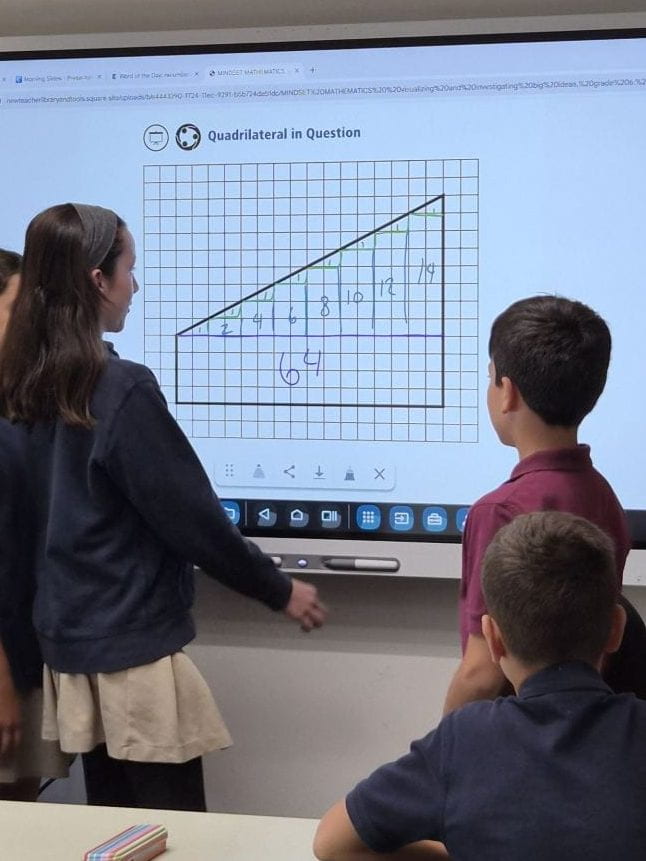
It was time for us to return to our Mindset Mathematics and show off how well we can learn from our mistakes! We started with a class discussion of strategies we tried last time we attempted to calculate the area of the following shape:
We then brainstormed some ways we could combat some common errors we were encountering when attempting to find the area.
While these error corrections made students more confident, and we got a lot closer to the answer – nobody was able to get the same answer using more than one method, or the same answer as each other. Over the weekend, I took on the challenge to attempt to solve this problem myself, and after a few attempts, I was able to get the same answer with two different methods! We talked about how even if we made a couple small mistakes in our full execution of solving the problem, as a class, we still learned a lot of incredibly important Math techniques.
The big challenge with this activity isn’t the Math itself, it’s the stamina and focus needed to do those techniques a ton of times and avoid making a single mistake. It’s like being assigned 70 practice questions and getting 2 wrong due to a tiny mistake/oversight. Those 2 questions you made a mistake one does not mean you can’t do the skill correctly, because you most definitely showed that you have mastered the skill on the 68 other problems you got correct! So, we didn’t focus on getting the “correct” answer/area of the shape, but rather the skills we practiced and reviewed along the way. These skills were:
How to calculate the area of a right triangle.
How to calculate the area of an isosceles triangle.
How to calculate the area of a scalene triangle.
How to calculate the area of a square/rectangle.
Triangle terminology: base, height, and hypotenuse.
Pythagorean Theorem: a2 + b2 = c2
How important it is to write our problem solving work clearly, to make it easy for others to follow and track.
FRIDAY, OCTOBER 17, 2025
Today, we started with our word of the day quick write, where Jason and Becky tied for the win! However, due to having a stronger/clearer plot structure, and using all the words correctly within their story, our winner was: Becky!
We then moved onto our vocabulary tests. When students finished their test, they were able to work on revising their 100 word spooky stories based on the feedback they were given from me.
In our afternoon class, students practiced their Children’s Book Presentation Skills in preparation of reading to their lower grade audiences next week! Not only were students excited to hear each other’s stories, but presentation skills are difficult to master and need to be practiced. We gave each other feedback for ways they could improve their presentations for their audiences next week, some of that feedback included:
Doing different voices for different characters to help your audience imagine your story clearly.
Reading slowly and making sure to clearly articulate each word.
Taking a pause to really show your audience the book pictures.
Speaking loud enough for all to clearly hear you.
Feedback is a lengthy process, so we prioritized providing feedback to some of our earlier presenters on our presentation schedule today, and will continue to allow later presenters to practice before their big presentation day! Students can, and should, always be practicing a bit at home. They can either practice presenting their literal books if they completed them digitally, or they can just practice reading any other children’s book they have around. The skill remains the same, regardless of how they practice!
Science with Ms. Pam!
Students continued working on their projects to finish up their cell unit!
FRIENDLY REMINDER: UNIT TEST NEXT THURSDAY, OCTOBER 23RD!
Math with Mr. Zafeiris!
This week in Mathematics, students worked on percentages, learning how to find the original value and calculate discounts. In Geometry, we discussed congruent angles and how to identify them in different figures. Students participated actively and are building a strong understanding of how these concepts connect to real-life situations.
As students continued to develop their understanding of both Algebra and Geometry concepts, students were informed they will begin receiving some Khan Academy assignments to practice them at home. While this homework should not be overly stressful for students, they are encouraged to take their relevant Math notebooks home to study from and use to complete their Khan Academy assignments. These assignments will be posted for them in Google Classroom!
I look forward to sharing more of our learning with you next week! (:
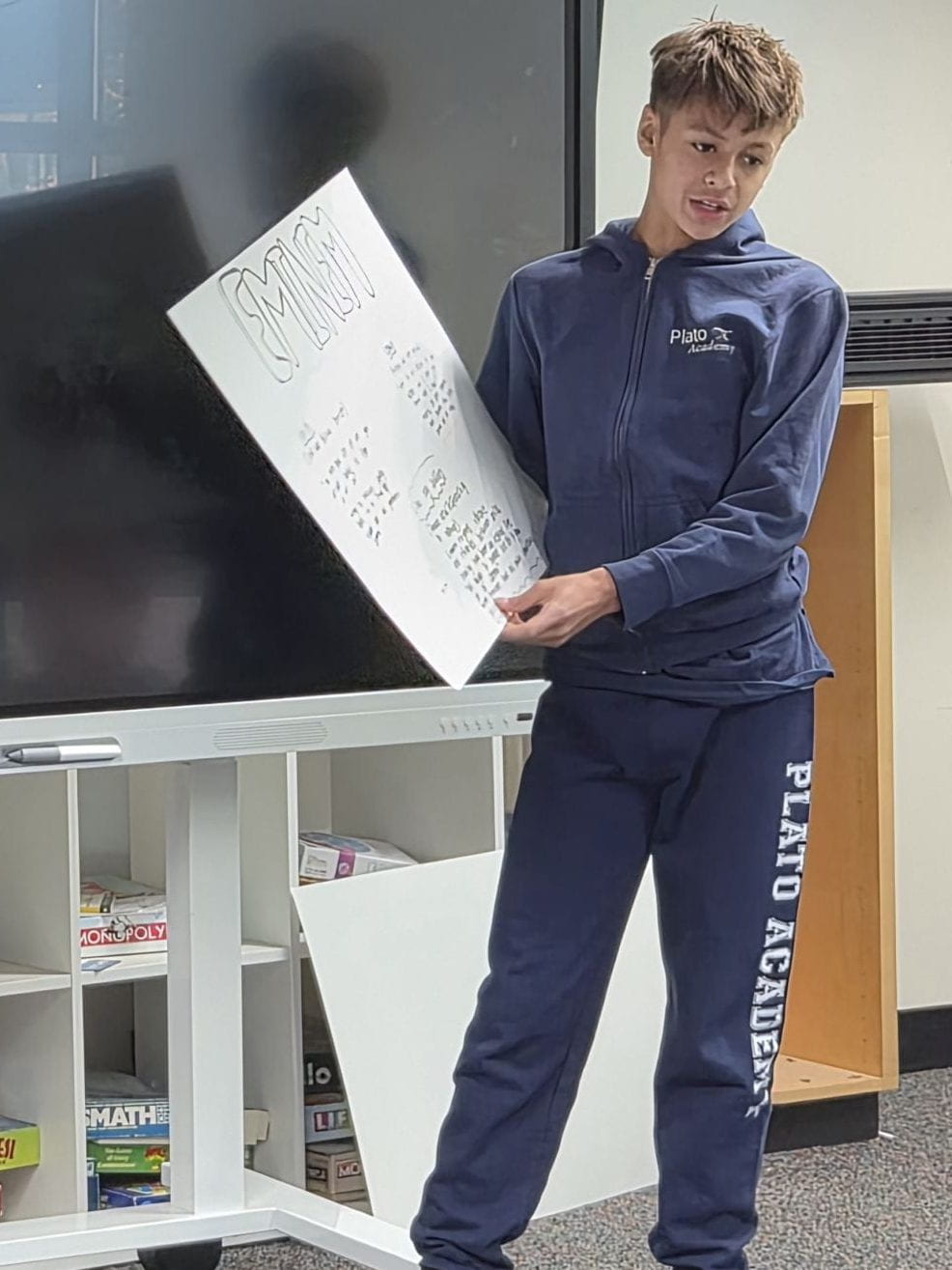
This morning, we returned to our Multicultural Monday lessons with Mr. Joe’s class. Today, students researched their very own “Modern Day Dylan.” We’ve been learning all about Bob Dylan, and how his music was created to challenge cultural norms and/or raise awareness to social issues. It was time for students to research artists they love today and see how they use their own music to do the same. Students were split into duos and trios to work on this project. Once their posters are created, groups will present what they learned about their “Modern Day Dylan” to the class. Some groups happened to choose the same artist, but these artists have such large discographies and diverse platforms that I’m sure each presentation will give us some new and exciting insight! The artists our groups thought of and chose were: Billie Eilish, Kendrick Lamar, Michael Jackson, Green Day, and Eminem.
In our afternoon class, we postponed our silent reading period from today for Wednesday to ensure students had as much time as possible to finish their WWI Review Games! Tomorrow, students will have a chance to play each other’s games as final test-prep for their WWI test on Wednesday.
TUESDAY, OCTOBER 7, 2025
This morning started with our word of the day and our first organization race! To help encourage students to keep up on their binder portfolio organization, we will occasionally hold organization races, where students race to various locations to find various assignments first for 2 dojo points. This is a great opportunity for students to notice if some of their pages are filed in the wrong places, and give them an opportunity to take their binders home to reorganize them without it being an overwhelming task by having tons of papers adding up for the whole quarter/school year.
After that, it was time for the main event: playing each other’s WWI review games! Students did a phenomenal job creating their games, and had a lot of fun playing them as a review for tomorrow’s test. Each group had a member who created each game, which was the game leader for that station. We rotated every 25 minutes to ensure students had enough time to play every group’s game, tally up their scores to determine a winner, and set up their station for the next group to enjoy! (:
WEDNESDAY, OCTOBER 8, 2025
This morning, students started with their word of the day and got right into taking their WWI test. Then, in the afternoon, students enjoyed practicing their critical thinking skills by playing a game of CAP and learning about Fright Club! Fright Club is a creative writing competition where middle school and high school students compete to get their 100 word spooky stories published by Young Writers. Today, students discussed what all went into creating a good spooky story and worked on a couple introduction activities to practice recognizing techniques they could use, like building suspense, and developing atmosphere in their writing.
Unfortunately, I was out sick and unable to take photos of today’s activities.
THURSDAY, OCTOBER 9, 2025
This morning, students completed their Quick Write early as we have an awesome field trip tomorrow! This week’s words really challenged the students’ writing: Leo started us off with the most words used (19), but a couple of words were used incorrectly! His plot was awesome, and he did a great job of incorporating some of our more complicated words; but in order to be crowned this week’s Quick Write Champion, all words needed to be used correctly. So, we talked as a class about how he could have fixed his sentences to use these words correctly, which served as a great reminder of the importance of grammatical structure. Next up, Vasia read her story of 18 words – but she ran into the same problem! She got so close to victory, but one of her words was used incorrectly. We talked as a class of how she could have used it correctly in her story, which further emphasized the importance of writing clearly with lots of details. Finally, Teddy read his story using 17 words… and he became this week’s champion! All of his words were used correctly and intentionally while writing with a clear plot structure. Congratulations Teddy!
Then, we had a brief discussion of some of the writing techniques students learned about yesterday for Fright Club. We read a couple of examples from last year’s publication, and discussed elements that made their stories spooky and successful in only 100 words. Students then completed a Math Diagnostic Test. This was not a test they could pass or fail, but simply a test to tell us their general levels. Once they finished their diagnostic test, they were able to begin working on their first drafts of their spooky stories!
FRIDAY, OCTOBER 10, 2025
Today is the most exciting day of the week because it was FIELD TRIP DAY! For today’s field trip, we went to Cantigny State Park in Wheaton, IL. On this field trip, students visited the US Army First Division Museum and looked at various artifacts, as well as, entered a recreation of a WWI trench. Students were also introduced to their next unit (WWII) by visiting the exhibit dedicated to the 1st Division in World War II. The Cantigny Museum also had a variety of military vehicles from WWI, WWII, Vietnam, and Iraq/Afghanistan students were able to explore and learn more about.
We started our exploration by climbing some tanks! We took a small hike around the building and discovered a beautiful memorial to our fallen veterans. While many students blew me away on this trip with their maturity, knowlege, and respect – one moment really stood out to me as it was completely unprompted. When we were looking at the memorial, Nefeli pointed out the intentional and signifigant placement of the arching mirrors. There were two sides of this the arch way, and both were lined with mirrors. This created an infinity mirror effect below the roof of veteran identification tags. Her comment sparked a conversation where we pondered the following question: What does the infinity mirror represent? Students talked about it representing the never ending wars we face, the never ending mourning of families who lost their loved ones, the never ending respect we hold for veterans, the never ending generations who will benefit from their bravery of fighting in the war, and the never fading changes these wars created/caused.
Once students got their initial energy out, we were given a wonderful tour to learn more about the military vehicles from the various wars. We then went inside the museum, where our tour guide began our tour with a WWI quiz… Not to brag, but our class totally aced it! Needless to say, this field trip was a 10/10!
While these photos are great, there are plenty more that can be found in the Google Photo Album! Check it out! It’s linked here: https://photos.app.goo.gl/j8MbZTJwQbGBUCEv6
REMINDER: DUE TO THE FIELD TRIP AND LONG WEEKEND, STUDENTS WILL TAKE THIS WEEK’S VOCABULARY TEST ON TUESDAY OF NEXT WEEK! PLEASE MAKE SURE THEY ARE STUDYING FOR IT!
Math with Mr. Zafeiris!
This week in Mathematics, students worked on percentages, focusing on how to find the original value and practicing the simple interest formula.
In addition, they reviewed key geometry concepts, including angles, types of angles, and an analysis of adjacent angles from last Friday’s lesson.
Students showed strong participation and growing understanding as they applied mathematical reasoning to solve practical problems and explain their thinking.
Science with Ms. Pam!
This week we have been looking at how things get inside of cells, important things like food and water.
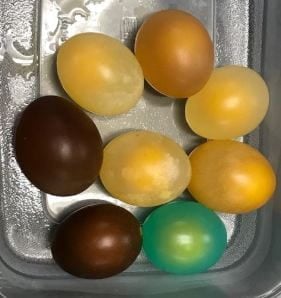
The students did an experiment on osmosis and diffusion.They used vinegar to remove the shell from an egg, leaving an egg with a thin, semi-permeable membrane. They placed the egg in a solution and predicted what would happen to the egg. They then let the egg soak for two days. There were a few surprises. The egg membrane allowed the dye to enter the egg, leaving us with interesting colors. The egg soaking in corn oil had big drops of water surrounding it as the water would not mix with the oil. It was also the smallest and softest egg. A light touch showed very little pressure on the inside of the egg. The egg soaking in coffee took in the most water as coffee had the largest percentage of water and osmosis tried to balance the percent of water on both sides of the egg membrane.
Today, students were introduced to cell metabolism. They will continue looking at photosynthesis next week and then spend a small amount of time on cellular respiration.
Cell models are due on 10/23. The students will have about two more hours of class time to work on the project. They are free to work on the models at home, but that shouldn’t be necessary.
I look forward to sharing more of our learning with you next week! (:
Welcome back to Multicultural Mondays! Today, we mixed it up a bit and put students in small groups to have small group discussions of their lyrical analysis of The Times They Are A-Changin’ and Like a Rolling Stone by Bob Dylan. Groups were given a side-by-side worksheet of the song lyrics to allow them to fully annotate and connect themes, symbolism, metaphors/similes, etc. between the two songs. Students did an awesome job making connections with each other, but the real magic came when it was time to share their small group findings in our large group discussion.
Students analyzed the idea of a stone starting at the top of a hill/mountain, and rolling down to the bottom, with no way to get back up there. They discussed different symbolic meanings of this top and bottom: the world before the Vietnam and/or Cold war versus after and being unable to undo the harm that was caused, having a great economy or lots of individual wealth and losing it all, the mental health aspect of a downward spiral due to feeling alone, etc. Students connected this imagery in Like a Rolling Stone to the image of becoming a sinking stone. They created this analogy of becoming a sinking stone in the bottom of the ocean, drowning in pain/sadness/bills, and in order to stop drowning while the rest of the world (fishes) rapidly change/swim around you… you need to do something about “it!” What is that “something?” Protest! We talked about rocks/stones and how they don’t do much. We discussed how these songs were a warning that if you don’t speak up/do something, you’ll become a stone that drowns in the despair of it all with no way of reversing the harm these wars/events could have on the future (no way of getting back to the top of the hill/mountain).
During our afternoon class, we had some silent reading time and independent novel check-in discussions. Later, students were offered an early retake of their Vocabulary Tests from last Friday. Many students were only a letter off from getting 100%, and rather than making them studying that same vocabulary set for a whole week, they had an opportunity to take the test again and correct their small errors to hopefully move onto a new set of words this week for their tests on Friday!
TUESDAY, SEPTEMBER 30, 2025
This morning, we played Friend or Foe to review and complete their WWI study guides for their test on Wednesday next week. The way Friend or Foe works is students work in teams (their table groups) to complete each question of the study guide. If their group all have the correct answer, they get to put a team sticky note on the grid. By the end of the review period, all study guides should be completed with the correct answers (the true prize) and their sticky note locations revealed their teams mystery points to declare a winning team. Our winning team with 84 points was Lily, Maggie, Jason and Teddy!
After Friend or Foe, students ate their snack to fuel up for their final WWI project – making a WWI review game! Students worked in groups of 3 for this assignment. Their projects are due Tuesday of next week so we can play them together as a review before their test. Their checkpoint for today was to gather their necessary supplies, and finalize what their game will be (name of their game, general rules/elements, etc.). Students had some amazing ideas! Adrian, Teddy and Maggie are combining elements of a coin drop game with jeopardy to become a race. Gigi, Nefeli and Kosta are making a game titled Get out of the Trenches! where students will need to answer various comprehension questions to escape the trenches (game board) – they’ve even included realistic penalties… for example, gaining trench foot and moving half the number of spaces their question is worth, getting sick and skipping a turn due to the unhealthy living conditions, etc. Becky, Vasia and Leo’s game is titled Conquer where they combined elements of known games Trouble and Monopoly for players to battle and conquer various alliances by answering trivia questions. Mina, Lily and Jasonwere inspired by Monopoly as well playing with the jail being the trenches, properties being different countries that were involved in the war, etc. All groups were getting their creative juices flowing today and demonstrating mastery of their WWI knowledge in their game development!
WEDNESDAY, OCTOBER 1, 2025
This morning, students learned about surface tension with a lab extension activity from last week’s reading. Even though some students said they had done this penny lab before – we did ours today with a bit of a twist! The traditional lab is to place droplets of water on each side of the penny until the bubble bursts in order to learn about surface tension, and after, analyze various factors that contribute to creating surface tension. Surface tension is a concept we will play with again in a future lab to extend their knowledge of a cell membrane, their current Science topic in Ms. Pam’s class.
Since we learned about the different materials pennies were made out of last week, students deepened the complexity of our lab by wondering if the different years the pennies were made would impact our group data. Since students were analyzing different charts and graphs in our reading, it was only fair if we made our own chart to display our findings after our experiment and had a discussion of how to represent our data clearly on the best fitting graph.
We determined the bar graph was the easiest to read because you could clearly see the comparison of how much water each side of the penny held for each individual penny, and as a collective group. Even though the line graph looked cool, it was harder to see a direct relationship between our heads and tails, both as a group and individually, as each individual penny wasn’t plotted… it was charted more like a timeline.
Unfortunately, we didn’t notice any direct correlations between the year a penny was made and how much water the pennies could hold because the surface tension factors remained consistent: The tails side held more water/had a higher surface tension allowance due to the small grooves in the image. The heads side held less water/had a lower surface tension allowance due to the head being a raised surface and the water molecules having less crevices to sink into/hold onto. Even though our graph didn’t show this correlation perfectly, when we calculated the class average of heads and tails, it supported our claim.
Class Average Droplets of Heads: 27.67
Class Average Droplets of Tails: 30.03
We talked about why some groups data was inconsistent with others, and discussed the importance of error analysis as scientists with experiments. We are all humans, we will make mistakes, that’s normal! However, scientific findings should be as close to error free as possible. We talked about how some groups may have been placing larger drops than others, which would provide us with inconsistent data as a whole. We talked about how some pennies were older than others and may have had less pronounced grooves than others, which is more about the wear and tear of materials rather than allowing us to investigate how the different elements of older/newer pennies impact surface tension. We also talked about the importance of calculating averages to reduce the errors in our findings as it is likely there was at least one trial that someone messed up on at some point, but by collecting a bigger pool of data, the impact of the error will get decrease with the more data we collect and input into our averages/findings.
In our afternoon class, students were given group work time on their WWI Review Game projects!
THURSDAY, OCTOBER 2, 2025
Today, we highlighted the beauty in making mistakes by starting Lesson 3 of Mindset Mathematics. We started by reviewing the techniques we discovered last week of calculating the area of irregular quadrilaterals and polygons. We then looked at the following shape:
I asked students what they noticed about this shape, and many pointed out there were a lot of triangles. We worked together to find a few right triangles, isosceles triangles, and scalene triangles. We then reviewed how to calculate the area of a triangle, and what that formula was: base x height / 2. We returned to this idea of skeptics and discussed how we know that formula is correct for calculating the area of a triangle. Students demonstrated mastery in their understanding of these previously discussed topics and skills. I then showed them the following shape outline:
Students then discussed in their groups how they may go about splitting this image up to calculate the area of it. All groups came to the conclusive idea to take a big chunk of space out of the middle with a large rectangle, and split the crazy edges into small triangles and rectangles/squares. Then, it was time to try it out with their teammates. Before they started, we had a discussion as to why I was requiring them to work in groups rather than individually. Students were reminded that we are all human and are bound to make mistakes – especially on such a complicated task! Their group mates could help catch mistakes, teach a new technique to someone who is lost/struggling, encourage each other when the task starts to feel daunting, etc. We talked about how mistakes are a part of learning and how nobody should feel deflated by them, because we actually learn more when we make mistakes, and mistakes are really exciting to find and correct! With a growth mindset and determination set, students began working in their groups.
After all our hard work – not a single group had the same answer. Was it a bit disappointing to not gain confidence in your group’s answer being the correct one by having the same answer as another group? Of course. Was this also an amazing opportunity for us to learn from each other’s possible mistakes and try to discover if any group had the correct answer? Absolutely! So, students put their skeptic hats back on, just like we practiced doing in our very first Mathematical Mindsets lesson, and started to look at each other’s work to catch any possible mistakes.
Ah-ha light bulb moments were firing rapidly! Some groups even realized mistakes they made on their own paper by looking at others before we talked about them as a class.Some mistakes found were:
Ignoring partial chunks/halves of grid squares in their shape sectioning.
Adding up their section/chunk areas incorrectly, or in a way that was hard to follow/double check their work.
Splitting the shape up sloppily, making it hard to be precise in their calculations.
Calculating their internal sections/chunk areas incorrectly, and therefore, making their ending calculation incorrect even if they were added together accurately since some internal values were incorrect going into the final calculation step. We think this was due to the graph paper being dotted rather than the traditional grid structure students are used to seeing.
We talked together about why it was easier for a different group to find our mistakes than it was for our own group to catch them while we were working, emphasizing how frustrating/disappointing it would be to find our own error and need to start over… and how it would be easier to not find any of our mistakes. We also discussed the power and beauty of how our brains think differently, making it easier for a pair of fresh eyes to find a mistake in our work due to it being something new to look at.
Students naturally asked if anyone got the correct answer, to which I replied, “We don’t know yet.” We talked about how me giving them the right answer and showing them exactly where their mistakes are wouldn’t help them learn as much from the activity, and how it will feel so much better to know your answer is correct through proving our work to skeptics, rather then being told if you are right or wrong when you’re not 100% confident in your work. We talked about the process in which we gain confidence in our math answers, and how we are 100% confident in our answers when we know we made no mistakes in calculating it. If a skeptic were to ask us how we know we have the right answer – we should be able to explain it! Each group had at least one mistake found by skeptics, and we talked about how even if a mistake led to a correct answer somehow, why would we care? If we don’t understand why or how it is correct because it was found through flawed methods… is it actually correct? No! So, during our next Mindset Mathematics lesson time, we will take what we learned from our mistakes this round, and try again with some improved techniques and methods!
FRIDAY, OCTOBER 3, 2025
This morning, we started with our New York Times Word of the Day quick write – and it got a bit intense today! Not only was our quick write a bit quicker than usual to make sure we could make it to our bake sale time slot, but Jason and Beckytied with 15 words used… meaning it was time for our tie breaker: who used the words more creatively/intentionally?
Both students would read their stories to the class, and the class would work together to double check how each word was used to ensure they were used correctly. The class would also help make sure they used all 5 of this week’s words in their stories so that their previous words used could count for points. First, Jason read his story to the class, and even though he had an easy to follow plot structure and his words made sense… he forgot to use Thursday’s word: Extol! Now, it was time for Becky to read her story – but she forgot to use “extol” as well! Then, we discovered that Leo and Kostaalsotied for using 12 words!Leo read his story first, and he included all 5 of this week’s words, his plot made sense, and all his vocabulary words were used correctly. It was time to see if Kosta could top the intentional and creative use of Leo’s vocabulary words, but as Leo read his story out loud, Kosta realized he had forgotten to use on of this weeks words! This meant that Leo was crowned this week’s quick write champion!
After our exhilarating quick write, it was time for us to head down to the annual Lee Denim Day Bake Sale! Before heading down, we talked a bit about the importance of raising breast cancer awareness and how it creates a sense of community and solidarity among survivors, caregivers, and advocates. We talked about how breast cancer awareness helps break down the stigma associated with the disease, encouraging open conversation and seeking help. Students were reminded that the money they spent at the bake sale would directly impact those affected by breast cancer, not just get them some yummy treats to enjoy (though that was a big plus).
When we returned back from the bake sale, students had to take their vocabulary test, but were promised they could eat their goodies as soon as they finished their tests. Once they were all done with their tests, we enjoyed an extended snack break together to continue building our classroom community as students ate their bake sale treats and chatted together.
COMMUNITY HIGHLIGHT!
While we always sit together during lunch, my heart was particularly warmed during today’s lunch block. Even though the bake sale supports a great cause, students also understood and recognized that not everyone may have been able to bring money and participate. Mina, Becky and Gigi lead the group in coordinating a (nut-free) candy salad for lunch today to ensure everyone got to enjoy a sweet treat together, and that nobody felt left out in the sweet festivities today. Our class even shared their goodies with Mr. Joe’s class! (:
I was really proud of them for their extended thoughtfulness and initiative they took in creating a warm, welcoming, and inclusive space for everyone to enjoy; and don’t worry, I still made sure everyone ate some real food for lunch along with their treats today!
During our afternoon class, students got back to work on their group projects!
I look forward to sharing more of our learning with you next week! (:
This morning, we reunited with Mr. Joe’s class for Multicultural Monday! We started by asking students what artists they found were inspired by our big three musical icons: Buddy Holly, Ritchie Vallens, and the Big Bopper. Students shared some really interesting artists! These artists included, but were not limited to: Weezer, Bruno Mars, Ed Sheeran… and of course, our golden ticket answer for today’s lesson, The Beatles!
Today, we transitioned from the 50s to the 60s – which was the prime time for The Beatles. We asked students how they thought the music would change from the 50s, either in instrumentation or in theme, returning to the previously discussed main idea of the evolution of music to reflect on current events. We talked a bit about historical events happening in the 60s: The Vietnam War, The Civil Rights Movement, etc. To assist in making this connection, we talked about different genres of music, such as rap and rock music – specifically, Green Day. Students reflected on the idea of protesting through music, a theme we will continue to explore throughout the rest of our Multicultural Mondays.
We then introduced today’s music icon: Bob Dylan! We listened to his song “Like a Rolling Stone” (1965) and did a group discussion of themes, moods, metaphors, and musical techniques they noticed. Students returned to this idea of the loss of innocence, they noticed the vocal tone being harsh/angry/passionate, they pointed out this idea of being poor and discussed how that can be both literal, as well as, a metaphor for feeling alone/abandoned. We then played “The Times They Are A-Changin’” (1964), and asked students to discuss with a partner some connections between the songs. These connections could be historically, lyrically, instrumentally, metaphorically, themes, symbols, etc.
Their homework was to dig deeper and beyond their partner brainstorming discussion of those connections, with the intention to further analyze connections between the two songs. Students are welcome to use research of historical events and context to aid in their analysis.
After snack and math, we had our silent reading block where I check in with students about their independent reading novels they are reading for homework. In our later afternoon class, students were introduced to their new set of vocabulary. We got familiar with the words together using Quizlet Live, and had a discussion of the different studying techniques people used to prepare for the last vocabulary test. We talked about what study techniques were helpful and why they worked. Students who did not get 100% on their previous test will continue studying vocabulary set 1 for a retake on Friday. Students who received 100% on vocabulary set 1 will study vocabulary set 2 for their test on Friday.
We then had an introductory discussion for tomorrow’s activity – making your own WWI propaganda posters! We reviewed the different propaganda objectives that were present in the posters we studied last week, and talked about assignment expectations to allow students to brainstorm tonight about what they might do on their posters tomorrow morning.
TUESDAY, SEPTEMBER 23, 2025
This morning, we learned about rhetorical appeals – an important persuasive tool. While the propaganda posters used propaganda objectives to convince the public of a wide variety of war support, they were only successful due to understanding how ethos, pathos, and logos could strengthen their persuasive posters. So, before creating their own WWI posters, students needed to gain understanding of these rhetorical devices by learning what they were, and practiced identifying their persuasive impact in a variety of modern day commercials.
Any student who was not able to finish their poster during class was assigned it for homework.
WEDNESDAY, SEPTEMBER 24, 2025
Students learned all about pennies this morning!
Students read the above article, from Scholastic ScienceWorld Magazine, and answered various comprehension questions that tested their reading comprehension skills of the article, and their ability to use their math skills to answer various questions about the statistics presented to them. While this is great for their mathematical development, it is also an important ELA skill to be able to thoroughly interpret data that accompanies informational text.
Students learned about the history of the penny: how it came to be, why Abraham Lincoln is the face of it, cost of production, the metals they are made of, comparing pennies to other coins, etc. Using all they learned about coins, it was time for the fun part, where they got to create their very own coin!
Next week, we will be doing a science lab with pennies – stay tuned!
In our afternoon class, we had our Ketchup, Mustard, Pickle day of the week! These days are always helpful for students because it allows them class time to catch up on anything they fell behind on completing recently, and puts them in good standing for the rest of the week/following week. This way, students don’t feel the pressure of remembering extra things on their to-do list at home.
THURSDAY, SEPTEMBER 25, 2025
Earlier this week, students created their own propaganda posters, many for the objective of recruitment. So, today, we talked about how the success of these propaganda posters affected millions of people’s lives – we talked about what life was like for soldiers in the war.
We started with an introductory slide show activity where students made inferences about what each image was depicting (such as alliance maps and what it meant for smaller countries, images of the trenches and the advantages and disadvantages of them, etc.) As a full circle moment, students went around the room on a scavenger hunt to read primary sources on what trench warfare was like. We then watched a couple of videos to strengthen our understanding of what trench warfare was like. These videos and sources prompted deep discussion questions posed by various students, covering a wide variety of topics. The primary conversation students kept returning back to was this idea of mental health.
One of the videos we watched covered shell shock. It was a concept that made many students uncomfortable and sad for those affected by it. Students then made the connection that this was one of the first labels for what we know now as PTSD (Post Traumatic Stress Disorder). Vasia asked if people could die from shell shock – to which the answer is, unfortunately, yes. This lead to a deep discussion about mental health, and the taboo concept for this time that men could also struggle with mental health. This lead us to a discussion of sexism and this harmful idea that men were strong, they could never cry because that would make the weak (like women). However, the trauma from WWI unveiled this idea that these strong, heroic men struggled to cope with the horrors from war, and needed resources. We talked about veteran support and resources for those who suffer from PTSD have improved, but are often still considered limited. This not only deepened their understanding for what these men and families went through, but deepened their empathy and respect for those affected by both historical and modern wars.
We then took a brief snack break to allow students some time to process everything they saw, many carrying over classroom conversations to their snack circles. Once they returned, it was time for them to realize exactly how many people were truly affected by these conditions.
It is estimated that about 1/3 of the soldiers that were in the trenches passed from trench warfare. WWI was an extremely brutal war, but its brutality is often overshadowed in student memory due to widespread knowledge of WWII, and desensitization to violence over the course of history. To help students understand the ways soldiers died in this war, without playing overly graphic reenactments, I placed 4 death scenarios of common ways soldiers passed away during trench warfare (1/3 of our class) into a bowl. If students “died” they were to read their scenario and silently move to the back area of the room to sit, while our surviving soldiers stayed at their desks. Our class went from 12 students, to 8. Students calculated how much of our class died from our reenactment, leading them to 33% of 1/3.
Teddy passed away from typhus (essentially, salmonella) in the trenches due to lack of medical resources/advancements, and ultimately, dehydration, due to the extremely small amounts of dirty water they had access to.
Gigi passed away from an infected wound from artillery.
Leo passed away from drowning in the knee deep water and thick mud that surrounded him in the trench.
Vasia passed away from the poison gas used against our troops, by Germany.
Students learned that, approximately, 15.4% to 17% of soldiers who fought in World War I were killed, with the total number of military deaths ranging from about 8.5 million to over 10 million globally. Many of their jaws dropped in horror due to it being such a large number.
Students were then assigned to imagine they were a soldier in the trenches, and that they had the opportunity to write a letter home.
They were reminded that due to the lack of technology, these letters (like the primary sources they read around the room) would be one of the only ways we knew exactly what happened during the war. Students were encouraged to sit with the uncomfortable details and “expose” them, as it would almost be disrespectful to those who were affected by these things to ignore them due to our discomfort. Here are some quotes from each of their letters:
“I killed someone and I am confused. I don’t know what is right, we are forced to fight and kill the Huns for peace.” – Vasia
This excerpt highlights the internal struggle many soldiers faced of doing what was required of them, but gaining moral consciousness of their actions, and the confusing struggle of processing both set of emotions. This also highlighted the harsh and inhumane treatment soldiers faced by their superiors in having no say in continuing to fight the opposing side with the argument/idea of fighting the war would bring peace to everyone else, and therefore, they must continue even when they feel uncomfortable doing so.
“I don’t think I can bear seeing his [Nathaniel – friend who died in the war] cold, motionless body one more time.I want to leave. I want food. I want clean water. I want my life back.” – Maggie
This excerpt highlights the idea of soldiers reminiscing of what life was once like before the war, wishing they could get it back. However, also highlighting that these terrible memories will follow these soldiers, and at times cause PTSD, to where they will never get their life completely back.
“The smell of bodies are now a part of my memories, and I have to pretend I don’t see the bodies. Sometimes, I want to die.” – Nefeli
This excerpt highlights a soldier’s mental health and reflected on the following question: Is it better for a soldier to die in the war a hero, and to be lovingly remembered by their “old self,” or live uncomfortably with the memories of the war, where they become unrecognizable and dysfunctional to those who love them? In which scenario will people suffer more?
“I hear bombs and gunshots every second. I cannot sleep when I know I killed someone.” – Teddy
This excerpt highlights the guilt some soldiers began to feel, and the brutal living conditions and lack of peace/rest due to constant war threats.
“Life in the trenches has been horrible. We’re struggling to remain standing as rats devour our fallen.” – Lily
This excerpt highlights the filthy living conditions within the trenches, and brutal decomposition via rats feasting on the fallen soldier’s corpses.
“There are wet mud piles up to our knees with buried dead human limbs sticking out of the Earth.” – Leo
This excerpt highlights the thick mud within the trenches and how it was so difficult to climb out of them that many soldiers dead bodies were buried within the trenches walls, with limbs easily dug up or exposed during combat.
“I hope I don’t get it [shell shock]. I have to go, I heard a boom.” – Kosta
This excerpt highlights how even in moments of “peace” within the war being taken by soldiers as time to write letters home… that peace never lasts long due to never ending counter attacks, creating more and more trauma for soldiers to process.
“I had some good friends, but unfortunately, they all died. Some got stuck in the thick mud, died in the trenches, and were seen being eaten by rats.” –Becky
This excerpt highlights some of the brutal ways soldiers were killed within the trenches, and the traumatic experience of surviving soldiers witnessing it and telling their stories to ensure the war was properly documented in history textbooks.
“These trenches are disgusting, there are rats everywhere and they are huge!It smells terrible, it smells like hell.” – Mina
This excerpt highlights the lack of cleanliness in the trenches, and the unpleasant smells of war – gun powder, decaying bodies, bodily waste/sewage, etc.
“A lot of people got PTSD [shell shock] and were shaking when they hear a bomb. I love you all, be safe.” – Jason
This excerpt highlights the risks of war reaching home for many soldiers, and the unknown fear for if their families will be affected in the same horrific ways they (the soldiers) have been.
“I am so exhausted and hungry. I have blisters on my feet, hands and legs from kneeling.” – Gigi
This excerpt highlights the poor living conditions within the trenches, as well as, some of the discomfort soldiers has to push past and ignore (on the smaller scale of blisters) throughout the war.
“Our feet swelled up to 3 times their size and some men had lost feeling to all of their legs. Our trenches are filled with water up to our waist. Our food is rotten, moldy, and infested with rats that are sometimes as big as cats.” – Adrian
This excerpt highlights, again, the poor living conditions; but it also introduces the idea of trench feet. The condition of trench feet was learned and described in the third primary source the students read, a quote from a postwar interview from Sergeant Harry Roberts. “If you have never had trench feet described to you, I will tell you. Your feet swell to two or three times their normal size and go completely dead. You could stick a bayonet into them and not feel a thing. If you are fortunate enough to not lose your feet and the swelling begins to go down, it is then that the intolerable, indescribable agony begins. I have heard men cry and even scream with the pain and many had to have their feet and legs amputated.”
Some students were asking to watch a movie about WWI. While I cannot in good conscience show the full films at school, due to many containing incredibly graphic violence, I also recognize the power of analyzing film as literature as an aid in developing student understanding. If you and/or your student would like to watch one as an extension activity at home for a family movie night, here are some great ones to consider:
All Quiet on the Western Front
2022 version is available on Netflix, but please know it is quite brutal and heavy viewer discretion is advised; the 1930 version is a lot more tolerable and available on Tubi. We watched an extremely small clip from the 1930 version in class and it’s a great film that highlights what the war was like without being overly traumatic. However, despite it being the most tame I could find… it is still about a brutal war, so please review if it would be a good fit to watch with your student before letting them watch it. Viewer discretion is advised.
War Horse
Filmed in 1971, but unfortunately, I was not able to find it available for free streaming on any platforms. The cheapest appeared to be on Prime Video. It is PG-13, so it is not nearly as graphic as some of the newer films and could be a good choice if they want a film in color but not overly intense graphics; however, please review the film before showing it to your student to gauge if it is a good fit for them to watch. As with any war movie, viewer discretion is advised.
1917
This was filmed in 2019 and is also available on Netflix… however, the newer the film, often the more violent and brutal they are to watch, so please preview it before watching it with your student. Similarly to the 2022 film above, heavy viewer discretion is advised (great film, but quite graphic/intense).
This extension activity completely optionalas it may be too overwhelming for some students!
Please know, I completely understand if your student is uncomfortable watching any of these films and if you, as parents, feel that this extension activity is too intense for your student. Each student has different maturity levels and tolerance/interests in films about war. Even without watching a WWI film, please rest assured your student has a great understanding of the brutal aspects, and impacts this war had on the world as we know it today, based on the activities we did in class.
FRIDAY, SEPTEMBER 26, 2025
This morning, we did our weekly quick write activity. At the beginning of our quick write journey, it was challenging for students to incorporate these challenging vocabulary words from New York Times Word of the Day. However, after all of our practice, their writing skills are gaining great strength and complexity. So, what once was hard is now a bit too easy… it was time for a new challenge! Students were now given the restriction of only being able to repeat the vocabulary words once, rather than using one word in 5 different sentences. So, each word could only be included 2 times in their stories. This, in addition to ensuring they are writing with a clear plot structure challenged them to be more intentional with their word incorporation. I also increased the time they had to write as this version of our quick write would take more thinking and planning before they started writing their stories; which is great for increasing their writing stamina. Our student who used the most words in a way that was intentional with an easy to follow sequence of events and plot was: Becky! She used 26 words total in her story.
In the afternoon, it was time to reward everyone for their hard work yesterday. We work hard everyday, of course, but yesterday was hands down our most intense class yet. We got through a lot of content, and students were focused and respectful for the entirety of the serious activities.
Ever since students discovered Scrabble Monopoly, they haven’t stopped begging to play it again… and who am I to deny them a rematch with all the challenging skills Scrabble Monopoly helps to develop!? So, as a reward for all their hard work this week, we returned to the extremely enriching activity of Scrabble Monopoly to end our week on a high note! (:
REMINDER: YOUR STUDENT’S FINAL DRAFT OF THEIR CHILDREN’S BOOKS ARE DUE WEDNESDAY, OCTOBER 1ST! THEY SHOULD BE WORKING ON THEM AT HOME, FOR HOMEWORK, AS THEY WILL FINISH AT DIFFERENT TIMES AND SOME MAY WANT TO USE SPECIAL MATERIALS THEY HAVE AT HOME! THEY WILL NOT BE RECEIVING ADDITIONAL CLASS TIME TO COMPETE THESE AS WE ARE MOVING ON TO NEW PROJECTS AND CONCEPTS!
I look forward to sharing more of our learning with you next week! (:
This morning, we continued our Multicultural Mondays with Mr. Joe’s class! We started by answering the question: Is music a form of history? Students began making connections of how music documents historical events, such as, the day the music died. They also talked about how it documents an evolution as the music we listen to today is very different from the music of the 1950s. We talked about the purpose of learning history being to evolve, either as a country or a person. If something we did in the past went poorly, we learn from that mistake and try our best to not repeat it… because we evolve!
Keeping that in mind, and focusing on this idea of analyzing music to see how it evolved through time, we listened to the music that died. We started with Peggy Sue and That’ll Be The Day by Buddy Holly. Students picked out similarities of both themes and moods between Buddy Holly’s songs and American Pie from last week. One of the big things that was highlighted was this idea of upbeat instrumentals with somber lyrics, a technique we recognize in today’s music scene! We then went on to listen to La Bamba by Ritchie Valens, and Chantilly Lace by Big Bopper. We noticed, once again, similar upbeat and bouncy instrumentals. At this point, we started to really get into the music and some students were seen dancing and singing along to parts they knew – which was a lot of fun! Students were able to see that across all the songs, there was a level of this innocence we talked about dying alongside the music in the plane crash, and we talked about how that loss of innocence/simplicity changed music and society forever.
We ended our discussion by revisiting American Pie and singing along to it. This deepened student understanding of the song as we built up this huge understanding of cultural events and significance, along with additional historical context of events that were happening during this time in history.
As homework, your student should research a popular music artist that they know and love that has been inspired by one of the musicians we talked about today: Big Bopper, Buddy Holly or Richie Valens. Even if their favorite artist wasn’t inspired by them, odds are, whoever that artist was inspired by was inspired by one of them! Students should come prepared to share with the group which artist they found was inspired by these music legends.
Then, we had a quick snack to rejuvenate our brains for Math! After Math, students spent some time getting cozy with their independent reading novels from home (the books they should be reading for 20 minutes every night for homework). During silent reading time, students were pulled to talk with me about their books. This is where I check for reading comprehension, making sure the books they’re picking has appropriately challenging vocabulary, talking about different reading strategies and techniques they can use to strengthen their understanding of literature, etc.
In the later afternoon, students completed a mini-quiz on commas, and once they were finished, were given time to work on their Art To Remember masterpieces!
TUESDAY, SEPTEMBER 16, 2025
Since we are starting to get back quite a bit of work, we started by doing some organization of our binders and making sure everything was filed in the right section. We then explored Quizlet to learn about the awesome features students can use to practice their vocabulary at home for their first vocabulary test on Friday! After reviewing our first set of vocabulary, we played some Quizlet Live together, building up to harder formats as we practiced our words.
Winning team (for one of the rounds) group high-five! (:
We then practiced our spelling alongside our critical thinking skills with some Scrabble Monopoly! While this is a game I love playing with my family, it’s also an incredible game for our class to play with the following added rule:
If you use a vocabulary word in your scrabble board, you can either double the spaces your character moves around the board or inherit a property grouping of your choice.
While nobody was able to get a vocabulary word into their scrabble boards today, they still learned a lot:
At the end, they calculated their overall value (money wise and property wise). Our winners from each group were… Vasia, Teddy, Jason and Becky! We then asked our winners what strategies they may have used to help win, and a popular strategy was pre-calculating the word values and testing them on the monopoly board before playing the words to avoid paying rent to other players. Another popular one was getting as many points as possible with the Scrabble words to get around the board (to pass go) as many times as possible, as passing go was the most consistent way to get the most money in the game. Jason was our class champion today, ending with a value of $11,500! Next time we play, hopefully we get a new record!
They practiced problem solving. Scrabble is hard! It’s hard to build off other words with limited letters, sometimes it takes a long time to see a word you can spell. This is great in building their ability to pause and look at problems/puzzles in a new way when your original method isn’t working, which builds their dedication to figuring things out when they first seem difficult (which is helpful for standardized tests, reading a hard book, solving a difficult math problem, etc.).
They practiced key elements of the scientific method on a small scale; and even if they didn’t realize they did it, they did! Their hypothesis was a strategy they wanted to use to try and win. Their experiment was using the strategy as they played the game. Their result was if their strategy lead them to success! We then had a discussion of what strategies were successful, and we talked about why they were successful, which is a bit of error analysis where they could learn where their strategies fell short in helping them win. This is great because it helps them realize the scientific method is not limited to science – it can be applied to day-to-day life/tasks!
They grew their vocabulary by learning words from each other and practiced proofreading by double-checking each players spelling of their Scrabble word submissions.
The blank letter tile here represents the letter “d.”The blank letter tile here represents the letter “y.”
BONUS LEARNING MOMENT!
After our class, they went off to Art and regrouped for Lunch. During Lunch, students were challenging themselves to correctly use some of our previous New York Times word-of-the-day words in their lunchtime conversations. Some words I heard used successfully were: cacophonous, amalgamate, gaggle, arachnid, iconic, furtive, gobbledygook and edify! This is awesome because the best way to know if your student is learning and understanding their vocabulary words is to hear them integrate them into their day-to-day conversations… it’s even better when they decide to incorporate the words without being prompted. Of course, they are encouraged by earning Dojo points when they do it correctly, but I wanted to highlight it today, as today was the most seamless and most successful vocabulary integration I have heard/seen them achieve so far this year! (:
After lunch, we joined Ms. Pam for Science and ended our day making more memories at Recess.
WEDNESDAY, SEPTEMBER 17, 2025
This morning, we started with a brief class discussion of how WWI started, as a recall of their timeline activity. Teddy remembered there was the assassination of Archduke Franz Ferdinand that ignited the conflict, and Leo remembered there were many alliances between different nations that escalated to a large war in desire of expanded territories. We then did a more in-depth review by watching How World War I Started: Crash Course World History. The video is linked here if you’d like to watch it: https://youtu.be/Cd2ch4XV84s?feature=shared
We then learned what propaganda meant, and discussed what kinds of things are needed by the government when entering a war as a hint to the persuasive techniques used in our propaganda posters we would be analyzing next. A big idea Adrian pointed out was that we need resources in a war. We then did a group brainstorm of what those resources might be, and came up with the following list: food, money, medicine, citizen support, military equipment and soldiers. This list covered almost all 5 main objectives of wartime propaganda:
Recruitment of Soldiers
Financing the War (war bonds/taxes)
Nationalism
Conservation of Resources
Participation in home-front organizations to support the war effort
After explaining and defining what each objective meant, students were asked to float around the room and look at 15 propaganda posters. They would then identify which main objective each poster was promoting. Students were encouraged to talk to each other as they looked around, explain to each other why they thought the specific poster was each objective with evidence and reasoning. This reinforced the importance of supporting your claims with evidence and reasoning (argumentative structure). Once students finished their initial votes, they were told to review their answers with a peer who they did not yet speak to during the activity, and see if they got the same answers. If they didn’t, they were told to convince the other person they were correct using their evidence and reasoning.
We then reviewed and discussed the correct answers as a class, continuing this trend of explaining our claims with evidence and reasoning from the lesson/posters.
We took a snack break and went to Math, but we then returned to some reflection/review questions about what we learned from the activity. This was done through a Ketchup, Mustard, Pickle period to give everyone plenty of time to think independently about their reflection questions.
To ensure all students do their absolute best work on their Final Drafts of their children’s stories, and that they look super professional and polished, they are typing their story text in a Google Slides document. They will be finishing their illustrations on the printed pages of their story next week for homework. Their completed final drafts of their stories are due October 1.
If they are choosing to create them fully digitally, they need to be done and submitted to me by October 1. If they are creating them digitally, they are welcome to use AI to create their images (they have been warned that they need to describe every little detail of their book illustration in detail for each and every page to get them looking consistent), they can use Canva, they can use Google Slide shapes to create their characters, they can draw it on an ipad and insert the images digitally, they can also use various PNGs (photos with transparent backgrounds) to create their illustrations. Regardless of their method of digital creating, it should look like a real children’s book. That means, I shouldn’t see 3 random photos from Google added to a slide and say it’s done. Their images should visually reflect the part of the story that their written text is explaining.
While students worked independently, we listened to our class playlist. Students are always welcome to submit more school-appropriate songs to the Google Form in Google Classroom to continue to expand our classroom playlist! (:
THURSDAY, SEPTEMBER 18, 2025
Today, we learned how to calculate the area of irregular quadrilaterals and irregular polygons. We started by reviewing the formula for area of a rectangle: Area = Length x Width. We then discussed different ideas we had for how to translate this prior knowledge of finding the area of a regular quadrilateral, like a rectangle, and how we can use it to help us calculate the area of an irregular quadrilateral. Students began referencing techniques we used as skeptics and using other shapes to prove the validity of their claims that they created the assigned shapes through origami (specifically the connection that was made of how two right triangles can create a rectangle). After the initial brainstorm, groups were given the following irregular quadrilateral:
They were then tasked to work together and discover as many different methods as they could to calculate the area of the irregular quadrilateral. Students were encouraged to use different colors to help visually depict their methods.
Here’s a close up at the 5 methods we discovered together:
Students then presented their different methods and helpful techniques they discovered!
We then took a brain break with snack to ensure our brains were refreshed for the second half of today’s lesson. After we learned different methods from each other, our groups of 4 were split into teams of 2! Our pairs were given various irregular polygons to use the different techniques in calculating the area of the different shapes.
Here’s a close up of one of their solutions/techniques they used for each polygon:
Our pairs then presented the different methods they used to calculate the area of the irregular polygons:
Below is a summary of what we learned from today’s lesson:
I can find the area of irregular shapes by finding familiar shapes and patterns within the irregular shape to find the area of. I can then use the area of those familiar shapes to add the relevant units all together to get the irregular shape’s total area.
I understand that there are multiple methods I can use to simplify the irregular shape for my calculations.
I can check my answer by attempting to calculate the area of the irregular shape using a different method because different methods should receive the same answer when used correctly.
Students then enjoyed chess, P.E., and Science before ending our day with the best brain break of all… Recess!
FRIDAY, SEPTEMBER 19, 2025
This morning, we started with our word of the day and quick write. We talked about how far they have come with being able to incorporate these challenging words a lot easier, but now they have a new challenge: using them intentionally, rather than randomly to get points. Our winner of today’s quick write was Teddy!
We then moved onto our vocabulary tests. Students who did not get 100% on them today, will continue studying the same words next week and try again. Students who mastered this weeks vocabulary set will study a new set of words next week, and take their new test on Friday. Students were reminded that it isn’t about how quickly they master their skills, but about their determination to do so! (:
During our afternoon class, students revisited their final drafts of their children’s stories and both individually and peer reviewed it for CUPS and ARMS.
REVISE – ARMS
A – add details
R – remove unnecessary details
M – move things around to make the story flow better
S – substitute words that may better fit your story and/or your intended audience
EDIT – CUPS
C – capitalize
U – Usage
P – punctuation
S – spelling
They have until Monday (if needed) to double check their grammar before it is sent to print, for those completing their books by drawing them. Some were ready to print today, and they were given the printed copies of their books to begin illustrating over the weekend.
In the middle of our work block, we got a visit from Ms. Lisa’s class! They are collecting data throughout the school to various questions, and learning how to plot them on a graph. We were very excited to be a part of their project! (:
I look forward to sharing more of our learning with you next week! (: