MONDAY, SEPTEMBER 22, 2025
This morning, we reunited with Mr. Joe’s class for Multicultural Monday! We started by asking students what artists they found were inspired by our big three musical icons: Buddy Holly, Ritchie Vallens, and the Big Bopper. Students shared some really interesting artists! These artists included, but were not limited to: Weezer, Bruno Mars, Ed Sheeran… and of course, our golden ticket answer for today’s lesson, The Beatles!
Today, we transitioned from the 50s to the 60s – which was the prime time for The Beatles. We asked students how they thought the music would change from the 50s, either in instrumentation or in theme, returning to the previously discussed main idea of the evolution of music to reflect on current events. We talked a bit about historical events happening in the 60s: The Vietnam War, The Civil Rights Movement, etc. To assist in making this connection, we talked about different genres of music, such as rap and rock music – specifically, Green Day. Students reflected on the idea of protesting through music, a theme we will continue to explore throughout the rest of our Multicultural Mondays.
We then introduced today’s music icon: Bob Dylan! We listened to his song “Like a Rolling Stone” (1965) and did a group discussion of themes, moods, metaphors, and musical techniques they noticed. Students returned to this idea of the loss of innocence, they noticed the vocal tone being harsh/angry/passionate, they pointed out this idea of being poor and discussed how that can be both literal, as well as, a metaphor for feeling alone/abandoned. We then played “The Times They Are A-Changin’” (1964), and asked students to discuss with a partner some connections between the songs. These connections could be historically, lyrically, instrumentally, metaphorically, themes, symbols, etc.
Their homework was to dig deeper and beyond their partner brainstorming discussion of those connections, with the intention to further analyze connections between the two songs. Students are welcome to use research of historical events and context to aid in their analysis.
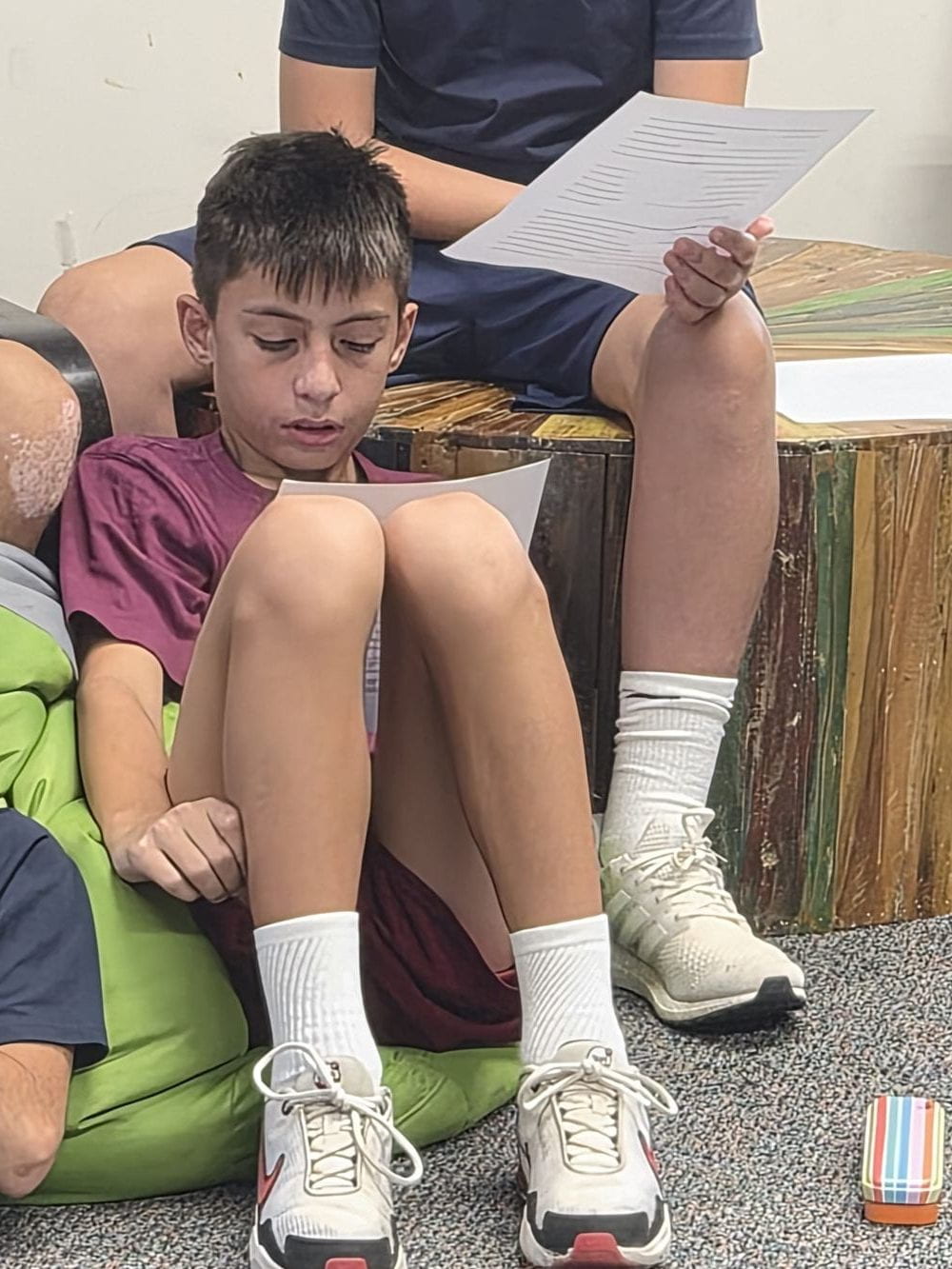


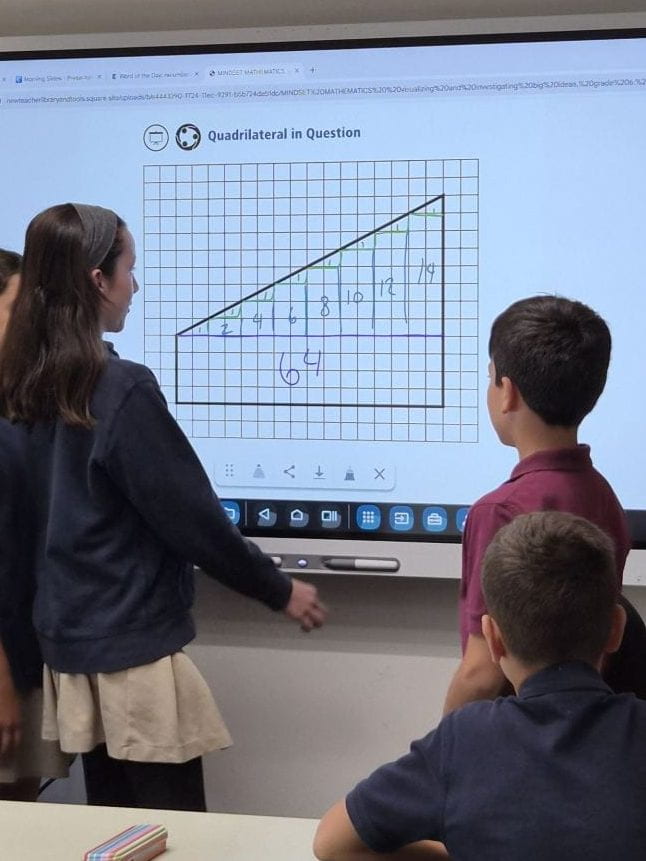
After snack and math, we had our silent reading block where I check in with students about their independent reading novels they are reading for homework. In our later afternoon class, students were introduced to their new set of vocabulary. We got familiar with the words together using Quizlet Live, and had a discussion of the different studying techniques people used to prepare for the last vocabulary test. We talked about what study techniques were helpful and why they worked. Students who did not get 100% on their previous test will continue studying vocabulary set 1 for a retake on Friday. Students who received 100% on vocabulary set 1 will study vocabulary set 2 for their test on Friday.


We then had an introductory discussion for tomorrow’s activity – making your own WWI propaganda posters! We reviewed the different propaganda objectives that were present in the posters we studied last week, and talked about assignment expectations to allow students to brainstorm tonight about what they might do on their posters tomorrow morning.
TUESDAY, SEPTEMBER 23, 2025
This morning, we learned about rhetorical appeals – an important persuasive tool. While the propaganda posters used propaganda objectives to convince the public of a wide variety of war support, they were only successful due to understanding how ethos, pathos, and logos could strengthen their persuasive posters. So, before creating their own WWI posters, students needed to gain understanding of these rhetorical devices by learning what they were, and practiced identifying their persuasive impact in a variety of modern day commercials.


Any student who was not able to finish their poster during class was assigned it for homework.
WEDNESDAY, SEPTEMBER 24, 2025
Students learned all about pennies this morning!

Students read the above article, from Scholastic ScienceWorld Magazine, and answered various comprehension questions that tested their reading comprehension skills of the article, and their ability to use their math skills to answer various questions about the statistics presented to them. While this is great for their mathematical development, it is also an important ELA skill to be able to thoroughly interpret data that accompanies informational text.


Students learned about the history of the penny: how it came to be, why Abraham Lincoln is the face of it, cost of production, the metals they are made of, comparing pennies to other coins, etc. Using all they learned about coins, it was time for the fun part, where they got to create their very own coin!


Next week, we will be doing a science lab with pennies – stay tuned!
In our afternoon class, we had our Ketchup, Mustard, Pickle day of the week! These days are always helpful for students because it allows them class time to catch up on anything they fell behind on completing recently, and puts them in good standing for the rest of the week/following week. This way, students don’t feel the pressure of remembering extra things on their to-do list at home.


THURSDAY, SEPTEMBER 25, 2025
Earlier this week, students created their own propaganda posters, many for the objective of recruitment. So, today, we talked about how the success of these propaganda posters affected millions of people’s lives – we talked about what life was like for soldiers in the war.
We started with an introductory slide show activity where students made inferences about what each image was depicting (such as alliance maps and what it meant for smaller countries, images of the trenches and the advantages and disadvantages of them, etc.) As a full circle moment, students went around the room on a scavenger hunt to read primary sources on what trench warfare was like. We then watched a couple of videos to strengthen our understanding of what trench warfare was like. These videos and sources prompted deep discussion questions posed by various students, covering a wide variety of topics. The primary conversation students kept returning back to was this idea of mental health.


One of the videos we watched covered shell shock. It was a concept that made many students uncomfortable and sad for those affected by it. Students then made the connection that this was one of the first labels for what we know now as PTSD (Post Traumatic Stress Disorder). Vasia asked if people could die from shell shock – to which the answer is, unfortunately, yes. This lead to a deep discussion about mental health, and the taboo concept for this time that men could also struggle with mental health. This lead us to a discussion of sexism and this harmful idea that men were strong, they could never cry because that would make the weak (like women). However, the trauma from WWI unveiled this idea that these strong, heroic men struggled to cope with the horrors from war, and needed resources. We talked about veteran support and resources for those who suffer from PTSD have improved, but are often still considered limited. This not only deepened their understanding for what these men and families went through, but deepened their empathy and respect for those affected by both historical and modern wars.
We then took a brief snack break to allow students some time to process everything they saw, many carrying over classroom conversations to their snack circles. Once they returned, it was time for them to realize exactly how many people were truly affected by these conditions.
It is estimated that about 1/3 of the soldiers that were in the trenches passed from trench warfare. WWI was an extremely brutal war, but its brutality is often overshadowed in student memory due to widespread knowledge of WWII, and desensitization to violence over the course of history. To help students understand the ways soldiers died in this war, without playing overly graphic reenactments, I placed 4 death scenarios of common ways soldiers passed away during trench warfare (1/3 of our class) into a bowl. If students “died” they were to read their scenario and silently move to the back area of the room to sit, while our surviving soldiers stayed at their desks. Our class went from 12 students, to 8. Students calculated how much of our class died from our reenactment, leading them to 33% of 1/3.
- Teddy passed away from typhus (essentially, salmonella) in the trenches due to lack of medical resources/advancements, and ultimately, dehydration, due to the extremely small amounts of dirty water they had access to.
- Gigi passed away from an infected wound from artillery.
- Leo passed away from drowning in the knee deep water and thick mud that surrounded him in the trench.
- Vasia passed away from the poison gas used against our troops, by Germany.
Students learned that, approximately, 15.4% to 17% of soldiers who fought in World War I were killed, with the total number of military deaths ranging from about 8.5 million to over 10 million globally. Many of their jaws dropped in horror due to it being such a large number.
Students were then assigned to imagine they were a soldier in the trenches, and that they had the opportunity to write a letter home.


They were reminded that due to the lack of technology, these letters (like the primary sources they read around the room) would be one of the only ways we knew exactly what happened during the war. Students were encouraged to sit with the uncomfortable details and “expose” them, as it would almost be disrespectful to those who were affected by these things to ignore them due to our discomfort. Here are some quotes from each of their letters:
“I killed someone and I am confused. I don’t know what is right, we are forced to fight and kill the Huns for peace.” – Vasia
This excerpt highlights the internal struggle many soldiers faced of doing what was required of them, but gaining moral consciousness of their actions, and the confusing struggle of processing both set of emotions. This also highlighted the harsh and inhumane treatment soldiers faced by their superiors in having no say in continuing to fight the opposing side with the argument/idea of fighting the war would bring peace to everyone else, and therefore, they must continue even when they feel uncomfortable doing so.
“I don’t think I can bear seeing his [Nathaniel – friend who died in the war] cold, motionless body one more time. I want to leave. I want food. I want clean water. I want my life back.” – Maggie
This excerpt highlights the idea of soldiers reminiscing of what life was once like before the war, wishing they could get it back. However, also highlighting that these terrible memories will follow these soldiers, and at times cause PTSD, to where they will never get their life completely back.
“The smell of bodies are now a part of my memories, and I have to pretend I don’t see the bodies. Sometimes, I want to die.” – Nefeli
This excerpt highlights a soldier’s mental health and reflected on the following question: Is it better for a soldier to die in the war a hero, and to be lovingly remembered by their “old self,” or live uncomfortably with the memories of the war, where they become unrecognizable and dysfunctional to those who love them? In which scenario will people suffer more?
“I hear bombs and gunshots every second. I cannot sleep when I know I killed someone.” – Teddy
This excerpt highlights the guilt some soldiers began to feel, and the brutal living conditions and lack of peace/rest due to constant war threats.
“Life in the trenches has been horrible. We’re struggling to remain standing as rats devour our fallen.” – Lily
This excerpt highlights the filthy living conditions within the trenches, and brutal decomposition via rats feasting on the fallen soldier’s corpses.
“There are wet mud piles up to our knees with buried dead human limbs sticking out of the Earth.” – Leo
This excerpt highlights the thick mud within the trenches and how it was so difficult to climb out of them that many soldiers dead bodies were buried within the trenches walls, with limbs easily dug up or exposed during combat.
“I hope I don’t get it [shell shock]. I have to go, I heard a boom.” – Kosta
This excerpt highlights how even in moments of “peace” within the war being taken by soldiers as time to write letters home… that peace never lasts long due to never ending counter attacks, creating more and more trauma for soldiers to process.
“I had some good friends, but unfortunately, they all died. Some got stuck in the thick mud, died in the trenches, and were seen being eaten by rats.” – Becky
This excerpt highlights some of the brutal ways soldiers were killed within the trenches, and the traumatic experience of surviving soldiers witnessing it and telling their stories to ensure the war was properly documented in history textbooks.
“These trenches are disgusting, there are rats everywhere and they are huge! It smells terrible, it smells like hell.” – Mina
This excerpt highlights the lack of cleanliness in the trenches, and the unpleasant smells of war – gun powder, decaying bodies, bodily waste/sewage, etc.
“A lot of people got PTSD [shell shock] and were shaking when they hear a bomb. I love you all, be safe.” – Jason
This excerpt highlights the risks of war reaching home for many soldiers, and the unknown fear for if their families will be affected in the same horrific ways they (the soldiers) have been.
“I am so exhausted and hungry. I have blisters on my feet, hands and legs from kneeling.” – Gigi
This excerpt highlights the poor living conditions within the trenches, as well as, some of the discomfort soldiers has to push past and ignore (on the smaller scale of blisters) throughout the war.
“Our feet swelled up to 3 times their size and some men had lost feeling to all of their legs. Our trenches are filled with water up to our waist. Our food is rotten, moldy, and infested with rats that are sometimes as big as cats.” – Adrian
This excerpt highlights, again, the poor living conditions; but it also introduces the idea of trench feet. The condition of trench feet was learned and described in the third primary source the students read, a quote from a postwar interview from Sergeant Harry Roberts. “If you have never had trench feet described to you, I will tell you. Your feet swell to two or three times their normal size and go completely dead. You could stick a bayonet into them and not feel a thing. If you are fortunate enough to not lose your feet and the swelling begins to go down, it is then that the intolerable, indescribable agony begins. I have heard men cry and even scream with the pain and many had to have their feet and legs amputated.”
Some students were asking to watch a movie about WWI. While I cannot in good conscience show the full films at school, due to many containing incredibly graphic violence, I also recognize the power of analyzing film as literature as an aid in developing student understanding. If you and/or your student would like to watch one as an extension activity at home for a family movie night, here are some great ones to consider:
- All Quiet on the Western Front
- 2022 version is available on Netflix, but please know it is quite brutal and heavy viewer discretion is advised; the 1930 version is a lot more tolerable and available on Tubi. We watched an extremely small clip from the 1930 version in class and it’s a great film that highlights what the war was like without being overly traumatic. However, despite it being the most tame I could find… it is still about a brutal war, so please review if it would be a good fit to watch with your student before letting them watch it. Viewer discretion is advised.
- War Horse
- Filmed in 1971, but unfortunately, I was not able to find it available for free streaming on any platforms. The cheapest appeared to be on Prime Video. It is PG-13, so it is not nearly as graphic as some of the newer films and could be a good choice if they want a film in color but not overly intense graphics; however, please review the film before showing it to your student to gauge if it is a good fit for them to watch. As with any war movie, viewer discretion is advised.
- 1917
- This was filmed in 2019 and is also available on Netflix… however, the newer the film, often the more violent and brutal they are to watch, so please preview it before watching it with your student. Similarly to the 2022 film above, heavy viewer discretion is advised (great film, but quite graphic/intense).
This extension activity completely optional as it may be too overwhelming for some students!
Please know, I completely understand if your student is uncomfortable watching any of these films and if you, as parents, feel that this extension activity is too intense for your student. Each student has different maturity levels and tolerance/interests in films about war. Even without watching a WWI film, please rest assured your student has a great understanding of the brutal aspects, and impacts this war had on the world as we know it today, based on the activities we did in class.
FRIDAY, SEPTEMBER 26, 2025
This morning, we did our weekly quick write activity. At the beginning of our quick write journey, it was challenging for students to incorporate these challenging vocabulary words from New York Times Word of the Day. However, after all of our practice, their writing skills are gaining great strength and complexity. So, what once was hard is now a bit too easy… it was time for a new challenge! Students were now given the restriction of only being able to repeat the vocabulary words once, rather than using one word in 5 different sentences. So, each word could only be included 2 times in their stories. This, in addition to ensuring they are writing with a clear plot structure challenged them to be more intentional with their word incorporation. I also increased the time they had to write as this version of our quick write would take more thinking and planning before they started writing their stories; which is great for increasing their writing stamina. Our student who used the most words in a way that was intentional with an easy to follow sequence of events and plot was: Becky! She used 26 words total in her story.


In the afternoon, it was time to reward everyone for their hard work yesterday. We work hard everyday, of course, but yesterday was hands down our most intense class yet. We got through a lot of content, and students were focused and respectful for the entirety of the serious activities.
Ever since students discovered Scrabble Monopoly, they haven’t stopped begging to play it again… and who am I to deny them a rematch with all the challenging skills Scrabble Monopoly helps to develop!? So, as a reward for all their hard work this week, we returned to the extremely enriching activity of Scrabble Monopoly to end our week on a high note! (:


REMINDER: YOUR STUDENT’S FINAL DRAFT OF THEIR CHILDREN’S BOOKS ARE DUE WEDNESDAY, OCTOBER 1ST! THEY SHOULD BE WORKING ON THEM AT HOME, FOR HOMEWORK, AS THEY WILL FINISH AT DIFFERENT TIMES AND SOME MAY WANT TO USE SPECIAL MATERIALS THEY HAVE AT HOME! THEY WILL NOT BE RECEIVING ADDITIONAL CLASS TIME TO COMPETE THESE AS WE ARE MOVING ON TO NEW PROJECTS AND CONCEPTS!
I look forward to sharing more of our learning with you next week! (: